Walk into any parts store and you'll see two price tiers on the battery shelf: standard flooded batteries and noticeably pricier AGM batteries. It's tempting to grab the cheaper one. Sometimes that's perfectly fine. On a growing number of cars, though, it's a mistake that costs more in the long run.
Here's a plain-English look at what separates an AGM battery from a standard one, how to tell which type your car needs, and why the answer matters a little more in Tampa Bay's heat than it would in a cooler state.
What a Standard Flooded Battery Is
A standard, or flooded, lead-acid battery is the design most cars have used for decades. Lead plates sit in liquid sulfuric acid electrolyte. During charging, the battery gives off small amounts of hydrogen and oxygen, which vent out of the case. Some flooded batteries still have removable caps; most sold today are sealed "maintenance-free" versions, but they're still flooded inside.
Flooded batteries are affordable, widely available, and work well in conventional vehicles without heavy electrical demands. Their weaknesses are that they don't love deep discharges, they must stay upright, and they lose water faster in high heat.
What Makes an AGM Battery Different
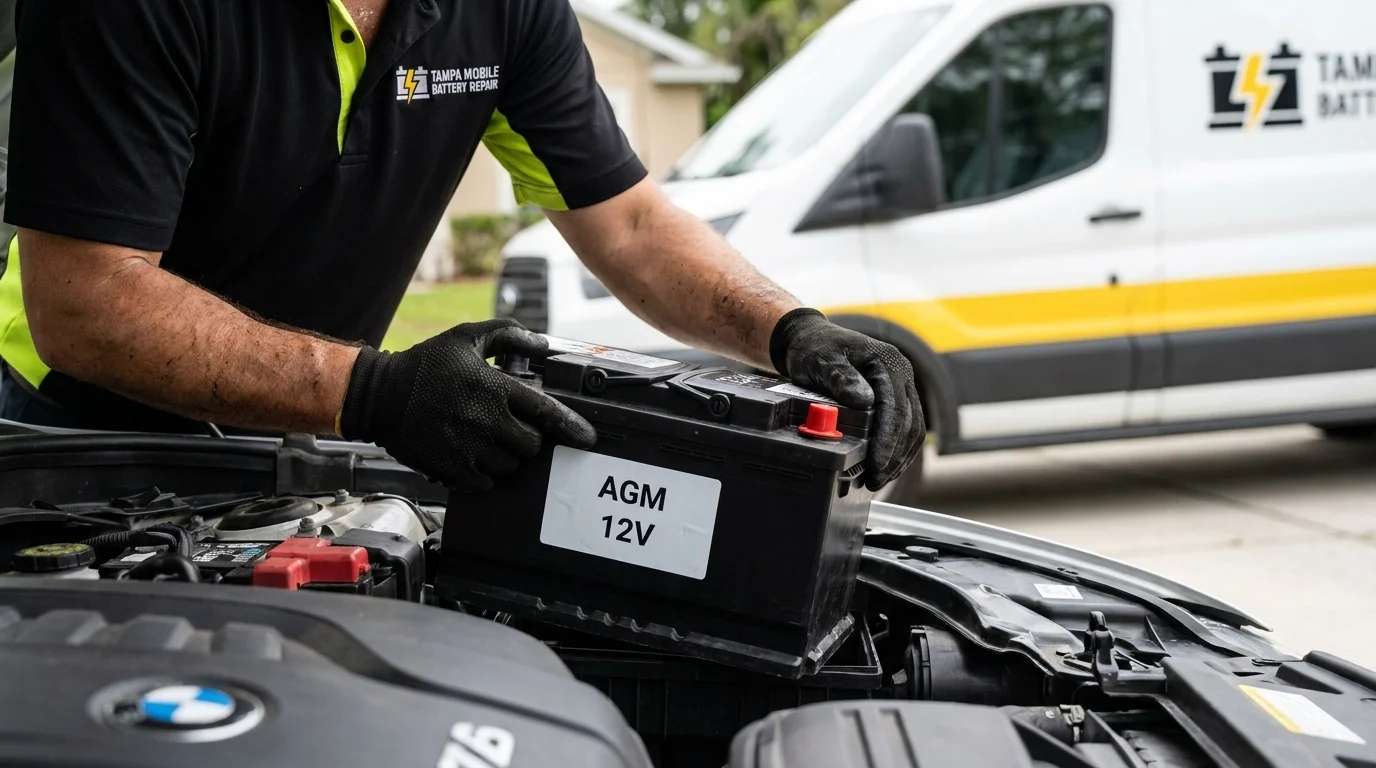
AGM stands for absorbed glass mat. Instead of free-flowing liquid, the electrolyte is soaked into thin fiberglass mats packed tightly between the plates. The battery is sealed and recombines most of the gases it produces internally rather than venting them.
That construction brings several real advantages:
- Lower internal resistance, so it delivers strong cranking power and recharges faster.
- Better tolerance for repeated discharge and recharge, which matters on cars that shut the engine off at red lights.
- Spill resistance and vibration resistance, which is why AGMs can be mounted in the trunk or under a seat.
- Generally slower water loss in high heat compared with a flooded battery.
The tradeoff is price. AGM batteries cost more to build, so they cost more to buy.
Where EFB fits in
Enhanced flooded batteries, or EFB, sit between the two. They're still flooded, but built to handle the extra cycling of basic start-stop systems. If your car came with an EFB, you can replace it with an EFB or upgrade to an AGM, but you shouldn't step down to a regular flooded battery.
Which Cars Need an AGM Battery
The simplest rule: replace like with like, or upgrade, never downgrade. If your car left the factory with an AGM, it needs an AGM. Vehicles that commonly require one include:
- Cars with automatic start-stop systems that shut the engine off at lights
- Many BMW, Mercedes-Benz, Audi, Volkswagen, Volvo, and other European models
- Vehicles with the battery in the trunk, under a seat, or inside the cabin
- Newer trucks and SUVs loaded with driver-assist systems, large screens, and power accessories
- The 12V auxiliary battery on many hybrids and EVs
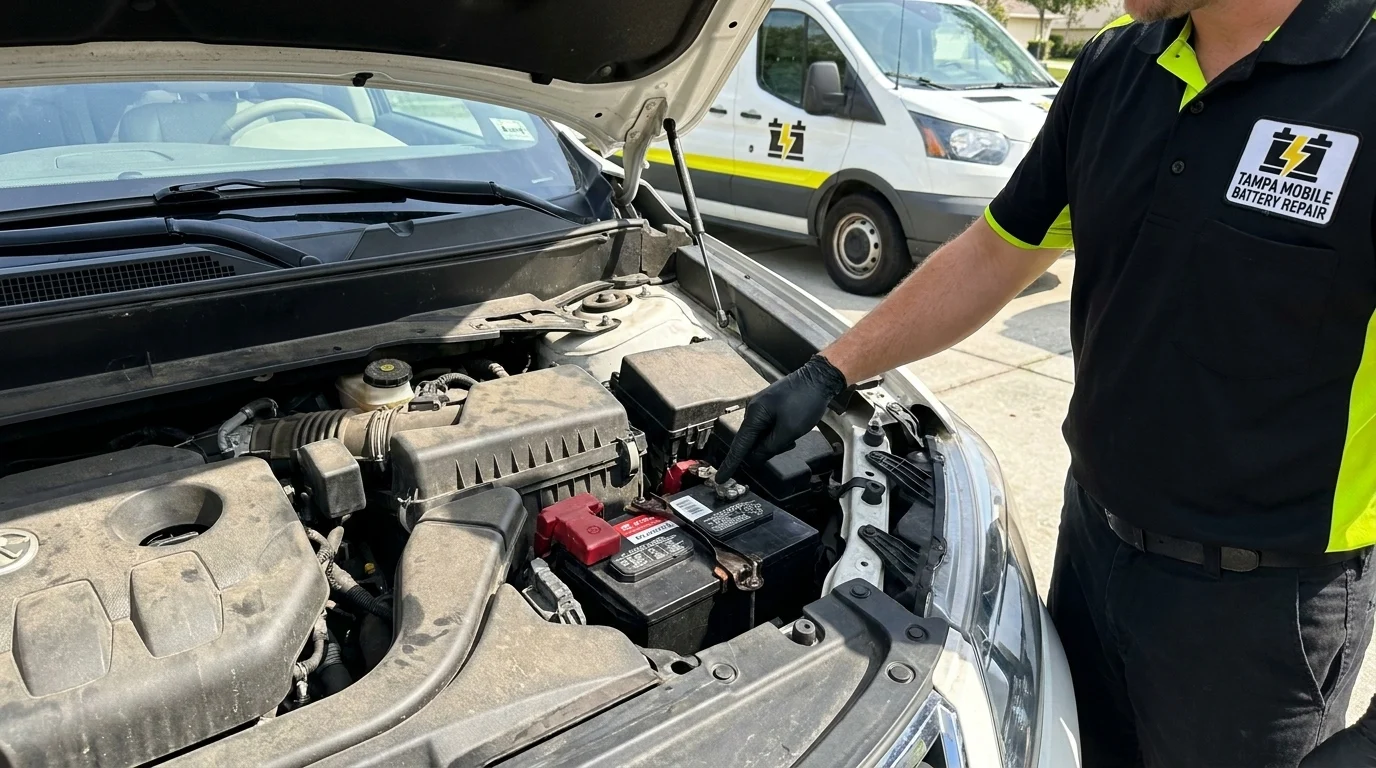
Look at the label on your current battery, which usually says AGM if it is one, or check the owner's manual. Many of these vehicles also need the new battery registered to the car's computer so the charging system treats it correctly. Skipping that step can overcharge or undercharge the new battery and shorten its life.
How Tampa Bay Heat Affects AGM and Standard Batteries
Heat is the main reason batteries wear out in Florida, and it hits both types. Our post on how long a car battery lasts in Florida explains the chemistry. In general, flooded batteries in Tampa Bay last about two to four years. AGMs often hold up somewhat better in heat, especially when they're in a car designed around them, but they don't make a battery immune to a Florida summer.
Where you park matters too. Cars living in a garage in Westchase tend to fare better than those cooking in an open lot all day. And cars near the water, from Bayshore in South Tampa to the canal-front homes of Apollo Beach, see more terminal corrosion from salt air no matter which battery type they run. A periodic terminal cleaning helps either way.
Can You Put a Standard Battery in a Car Built for AGM?
It will usually start the car, at least at first. The problems come later. A flooded battery in a start-stop car gets cycled harder than it was designed for and can fail early, sometimes within a year. The car's charging system may also be programmed for AGM charging behavior, which doesn't suit a flooded battery. Some cars will disable start-stop or throw warnings.
Going the other way, putting an AGM into a car that came with a flooded battery, is generally fine and can be a reasonable upgrade if you have extra accessories, make lots of short trips, or want better heat tolerance. Just make sure the group size, terminal layout, and cold-cranking amps match the vehicle.
Size and rating still matter
Battery type is only one part of the match. The group size determines whether the battery physically fits the tray and hold-down. Terminal position decides whether the cables reach without strain. Cold-cranking amps, which measure starting power, should meet or exceed the original rating, and reserve capacity tells you how long the battery can run the car's electronics if the alternator quits. Getting any of these wrong can cause fitment problems or shorten battery life, even if the type is correct.
What AGM and Standard Batteries Cost Installed in Tampa
For mobile installation in Tampa Bay, a standard battery typically runs $180 to $290 installed. AGM and EFB start-stop batteries typically run $260 to $420 installed. Batteries under a seat or in the trunk, or cars that need battery registration, may add $25 to $60 for the extra work. Our mobile battery replacement cost guide goes deeper into what drives the price.
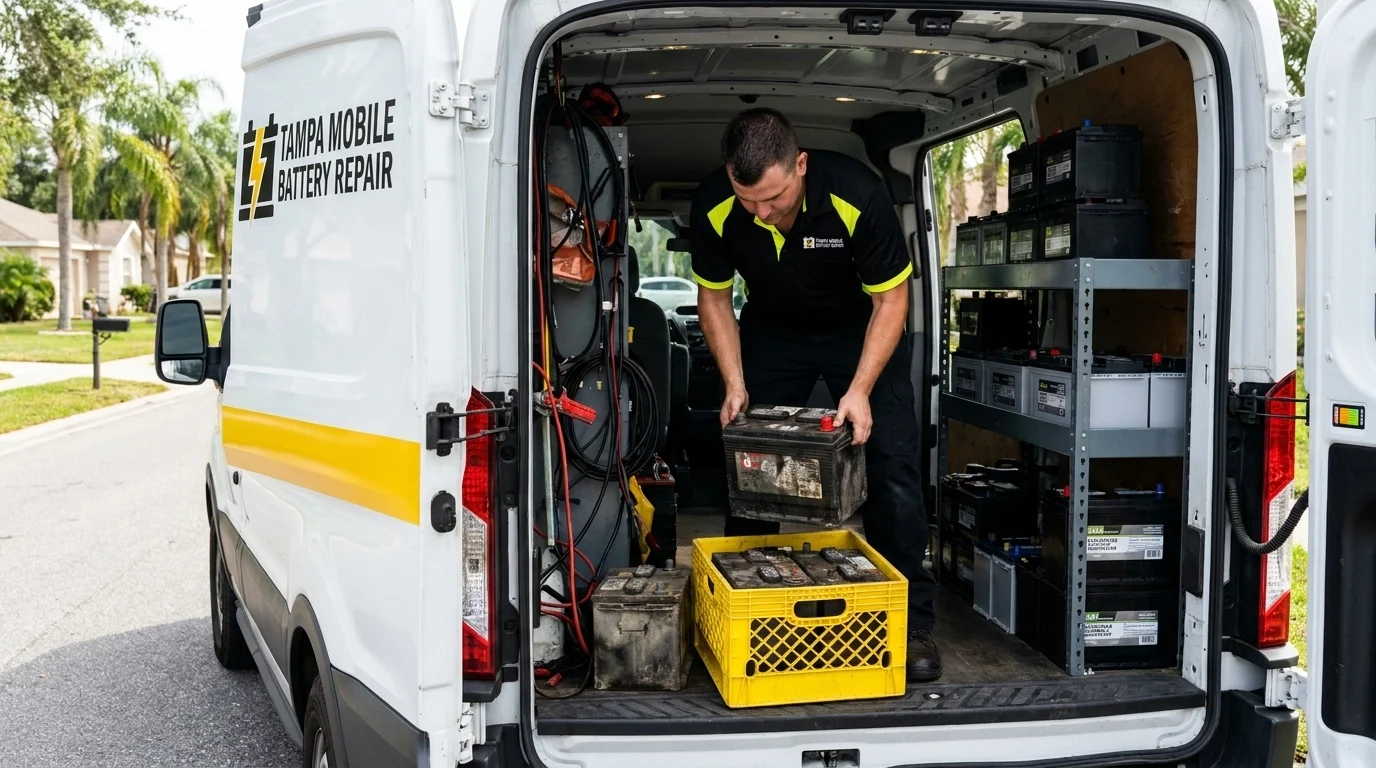
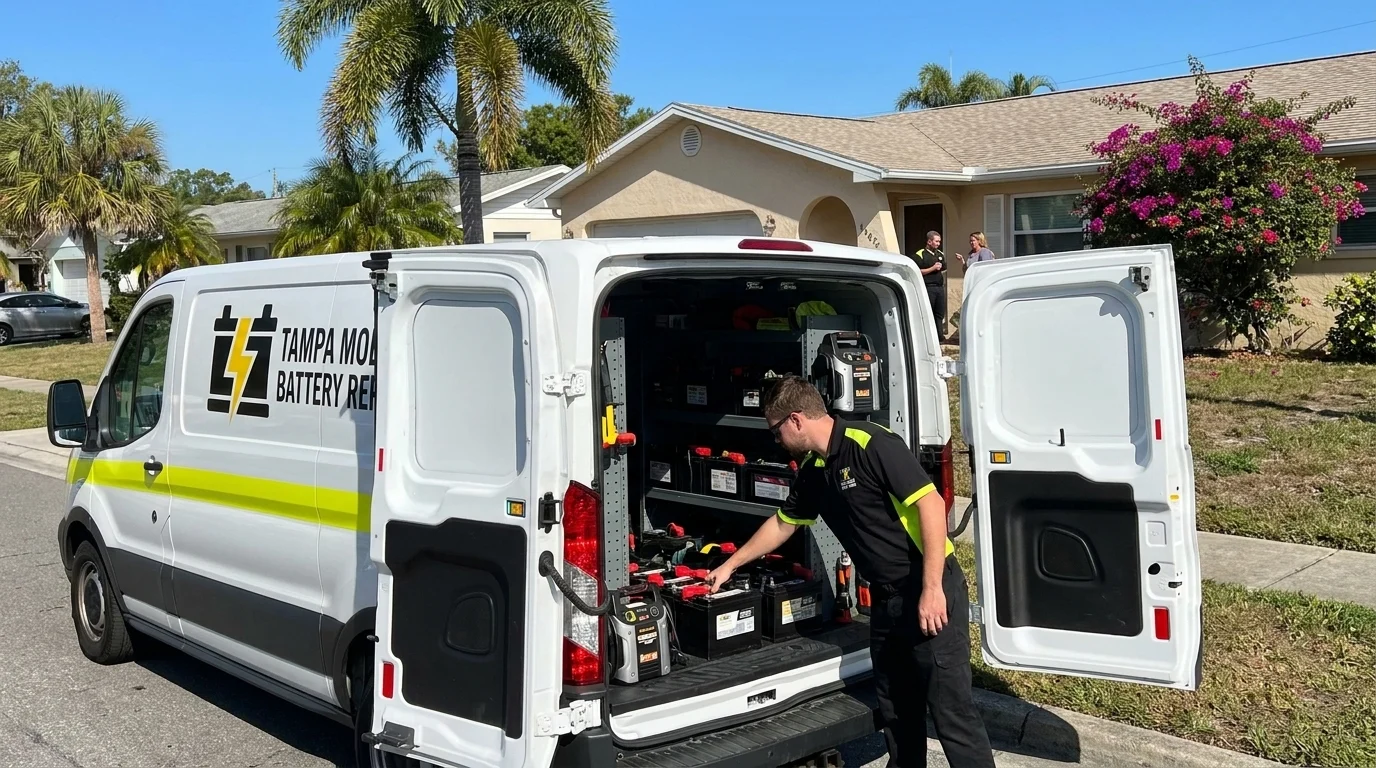
Our vans carry both types in the most common group sizes, so a mobile battery replacement usually happens in one visit. We look up what your vehicle requires before we head out, use a memory saver during the swap, register the battery when the manufacturer calls for it, and run a charging-system test afterward. If you're unsure whether your current battery is AGM, a quick battery test on-site will identify the type and tell you how much life it has left.
The short version: if your car came with an AGM, buy an AGM. If it didn't, a quality standard battery is usually the best value, with AGM as an optional upgrade.