Most people picture dead batteries on frozen winter mornings, but in Tampa Bay the busiest stretch for battery failures is the hot season. Summer heat speeds up the chemical reactions inside a lead-acid battery, which wears out its plates faster and lets it lose charge more quickly while parked. The damage builds up over months; the failure often shows up suddenly, on the hottest afternoon of the year.
You cannot change the weather, but you can slow the wear. Here are the habits and checks that make the biggest difference for drivers around Tampa, Hillsborough, and Pasco.
Why Tampa Heat Is Hard on Car Batteries
Under the hood of a car parked in a sunny lot, temperatures climb far above the air temperature. That heat does several things at once:
- It speeds up corrosion of the internal grids, which permanently reduces capacity.
- It can evaporate electrolyte in conventional flooded batteries.
- It raises the self-discharge rate, so a parked car loses charge faster.
Add constant AC use, stop-and-go traffic on Dale Mabry or Bruce B. Downs, and lots of short trips, and you get a battery that is worked hard and rarely fully recharged. That is a big reason batteries here typically last around 2 to 4 years, as explained in how long a car battery lasts in Florida.
Smart Parking Habits for Tampa Bay Summers
Where your car sits for hours matters more than where it sits for minutes.
- Choose shade or a garage for long stays at work or home. A covered deck downtown or a carport in your driveway helps.
- Use a windshield sunshade. It mainly protects the cabin, but a cooler car means less AC demand when you start it.
- Avoid leaving the car idling with the AC running for long periods while parked. Idle output from the alternator may not keep up with a blasting fan, lights, and electronics.
Driving Habits That Keep the Battery Charged
Starting the engine takes a big gulp of power, and short drives may not replace it. If your week is mostly quick runs to school, the grocery store, and the gym, the battery can slowly slide toward a partial charge, which in heat accelerates wear.
- Try to take at least one longer drive a week, 30 minutes or more, with some highway time on I-275, I-75, or the Selmon Expressway.
- Turn off headlights, seat heaters, and accessories before shutting off the car so the next start is easier.
- Unplug dash cams and chargers you do not need when the car is parked overnight.
Cars that sit
Seasonal residents, second cars, and vehicles parked for weeks are the most vulnerable. A quality battery maintainer, sometimes called a smart charger or tender, keeps the battery topped up safely. If that is not practical, plan for a test or a jump before you need the car. Communities like Apollo Beach and Sun City Center see a lot of this when owners head north for part of the year.
Keep the Terminals Clean and Tight
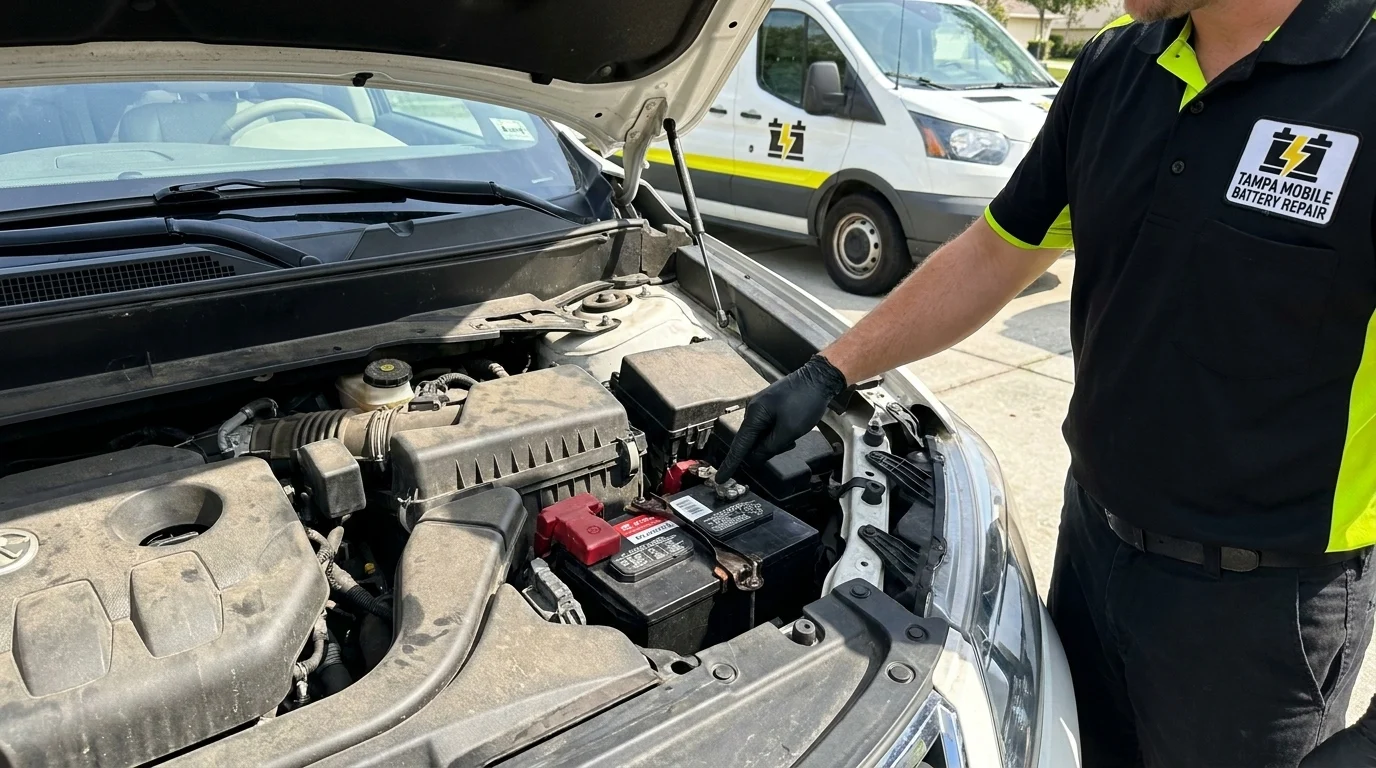
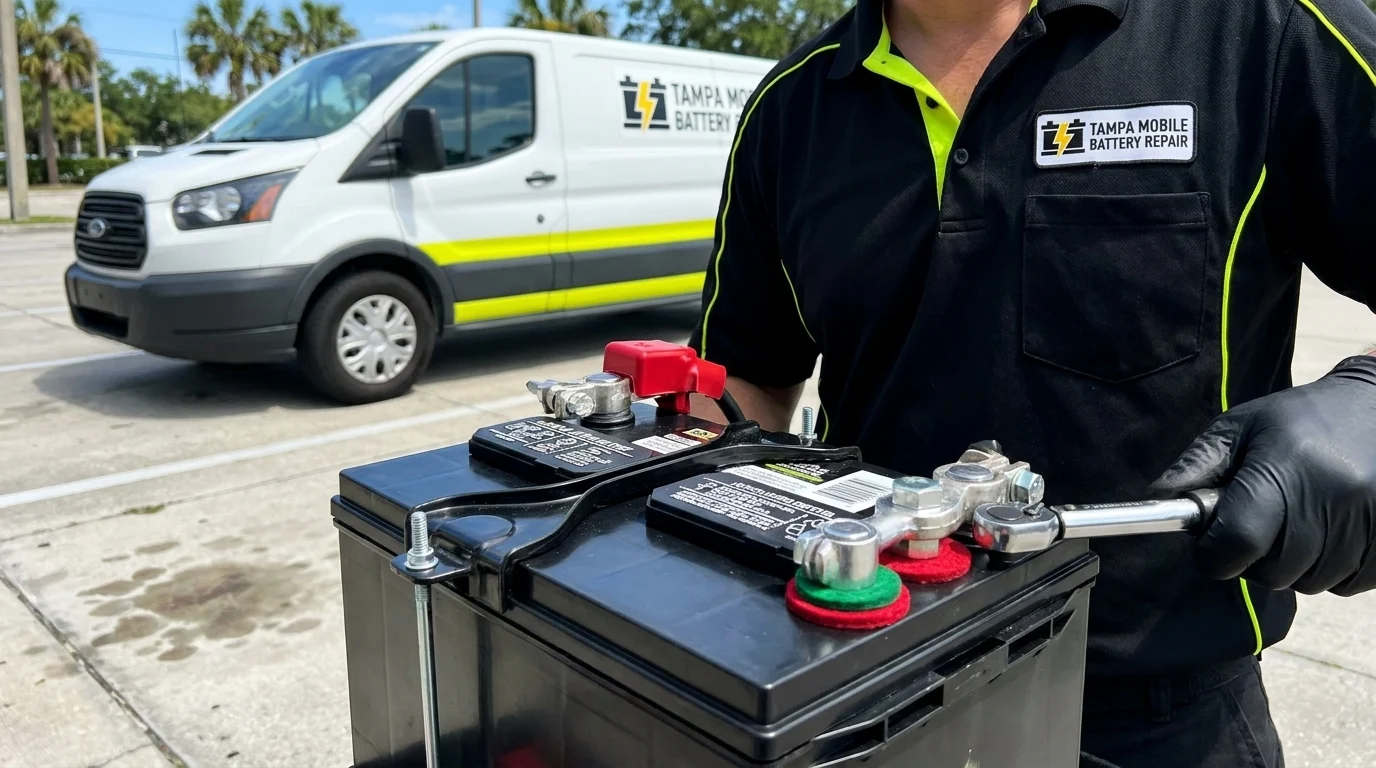
Humidity and salt air near Tampa Bay and the Gulf encourage the white or blue-green crust that forms on battery terminals. That buildup adds resistance, which means a weaker start and slower charging.
- Look at the terminals every month or two.
- Make sure the clamps do not twist by hand.
- If you see corrosion, have it cleaned and protected. Our battery terminal cleaning includes cleaning, a protective coating, and anti-corrosion washers.
Do not scrape heavy corrosion bare-handed. It is acidic and can irritate skin and eyes.
Test Your Battery Before the Worst of the Heat
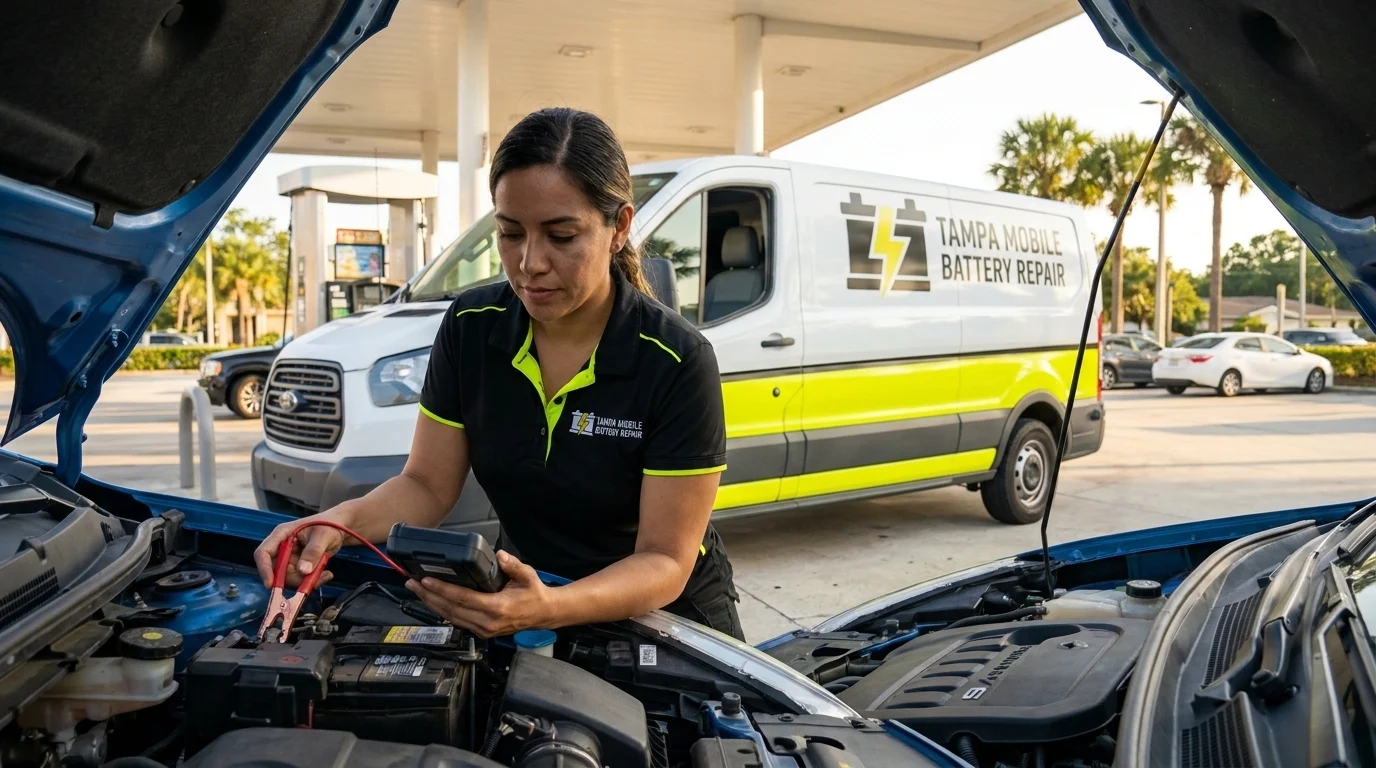
A battery can start a car one day and fail the next with very little warning. A conductance test shows how much capacity is left, so you can replace a weak battery on your schedule instead of in a parking lot at 4 p.m. in August.
Spring is a great time to test, before the long run of 90-degree days. Our on-site battery testing comes to your home or office, and the fee is credited if the result says you need a new battery. Watch for the early warnings listed in signs your car battery is dying: slow cranking, flickering lights, or a battery light on the dash.
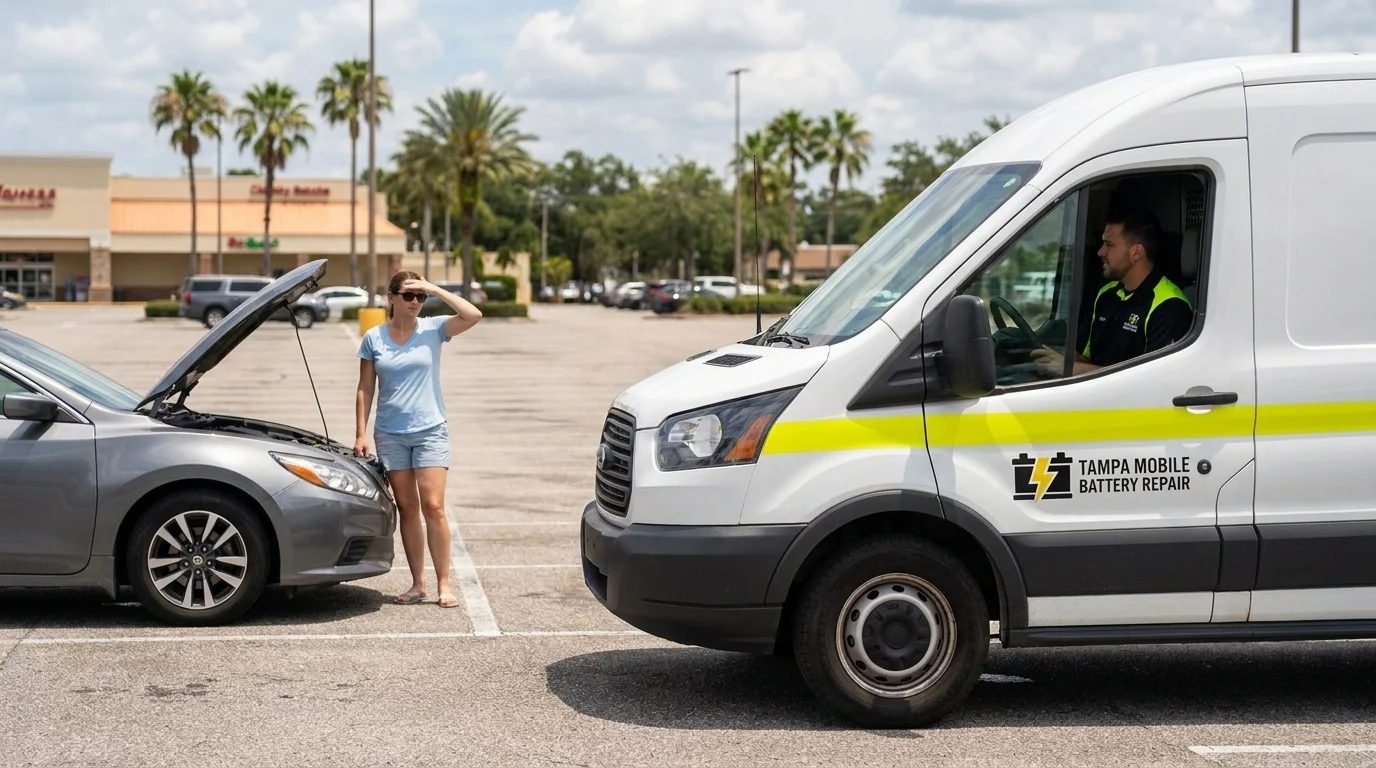
What to Do If It Dies Anyway on a Hot Tampa Afternoon
Even with good habits, a battery can give out at the worst moment, often in a sun-baked lot after you have been inside for an hour. A little preparation makes the wait safer and shorter.
Stay cool while you wait
A car with a dead battery has no AC, and cabin temperatures rise fast in direct sun. If you are in a store or office lot, wait inside nearby and keep your phone charged. If you are on the roadside, stay well away from traffic, out of the travel lanes, and keep water on hand. Never leave children or pets in a car that will not start.
Have the right details ready
- Your exact location, such as the store name, parking row, or the nearest exit on I-75 or the Veterans Expressway
- Your year, make, and model, so the right battery comes on the first trip
- What happened: clicking, slow crank, or no lights at all
Know your options
A jump start gets you moving, and the free test tells you whether the battery is worth keeping. If it is near the end, replacing it on the spot saves a second call. Our post on jump start vs. battery replacement walks through that choice, and you can keep a small set of jumper cables or a charged jump pack in the trunk for backup. In summer, store a jump pack inside the cabin rather than the trunk when possible, since high heat shortens its life too.
Pick a Battery Built for Florida Conditions
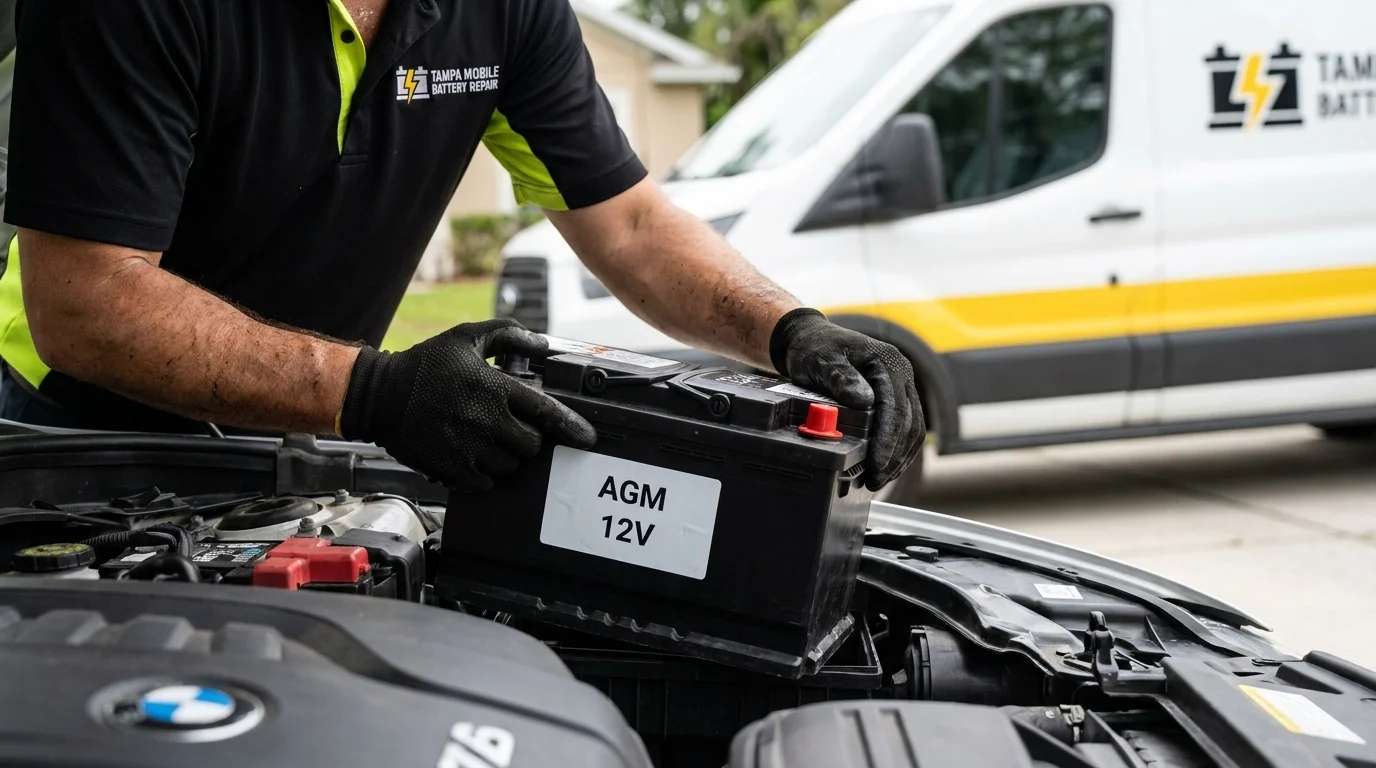
When it is time to replace, match the battery to the car and the climate. Many newer vehicles need an AGM or EFB battery, and AGM designs are sealed, which avoids the electrolyte loss that heat causes in flooded batteries. Our guide to AGM vs. standard batteries explains the tradeoffs.
Also check the date code. A battery that has been sitting on a shelf for many months has already lost some life. Whether you are in South Tampa, Valrico, or Zephyrhills, we bring a fresh battery that matches your vehicle's specifications and test the charging system after the install.