Ask a mechanic in Michigan how long a car battery lasts and you might hear five or six years. Ask the same question in Tampa and the honest answer is shorter: most batteries here last about two to four years, and plenty give out closer to the two-year mark. That gap isn't bad luck or cheap batteries. It's the climate.
People assume cold winters are what kill batteries, because that's when cars refuse to start. In reality, cold only exposes a battery that's already weak. Heat is what does the damage, and Tampa Bay delivers heat almost twelve months a year. Here's what's happening inside the battery, how to figure out how old yours is, and how to replace it on your schedule instead of in a parking lot at 5 p.m. in August.
Why Heat, Not Cold, Wears Out Batteries in Tampa Bay
A standard car battery is a box of lead plates sitting in a sulfuric acid electrolyte. Every chemical reaction inside it, including the slow, unwanted ones, speeds up as temperature rises. A common rule of thumb in the battery industry is that the rate of internal wear roughly doubles for every 15 to 18 degrees Fahrenheit of added heat. That's why the same battery that would cruise along for years in Ohio ages quickly in Hillsborough County.
Three things happen when a battery bakes:
- Grid corrosion speeds up. The positive plates are built on a lead grid that slowly corrodes over the battery's life. Heat accelerates that process until the grid can't carry current well.
- Water evaporates from the electrolyte. Even sealed "maintenance-free" batteries lose some water in high heat, which concentrates the acid and exposes plate material.
- Self-discharge climbs. A hot battery drains itself faster while the car sits, so it spends more time partially charged, which encourages sulfation on the plates.
Keep in mind that the air temperature isn't the number that matters. A battery sits next to an engine under a dark hood, often in a sun-baked lot, and under-hood temperatures on a Tampa summer afternoon run far above what the bank sign says.
Typical Car Battery Life in Florida, by Battery Type
There's no guaranteed number, but here's what we generally see across Tampa Bay:
- Standard flooded batteries: about 2 to 4 years. Many show their first signs of weakness around year two or three.
- EFB (enhanced flooded) batteries: similar to standard or slightly better, and built for the extra cycling of start-stop engines.
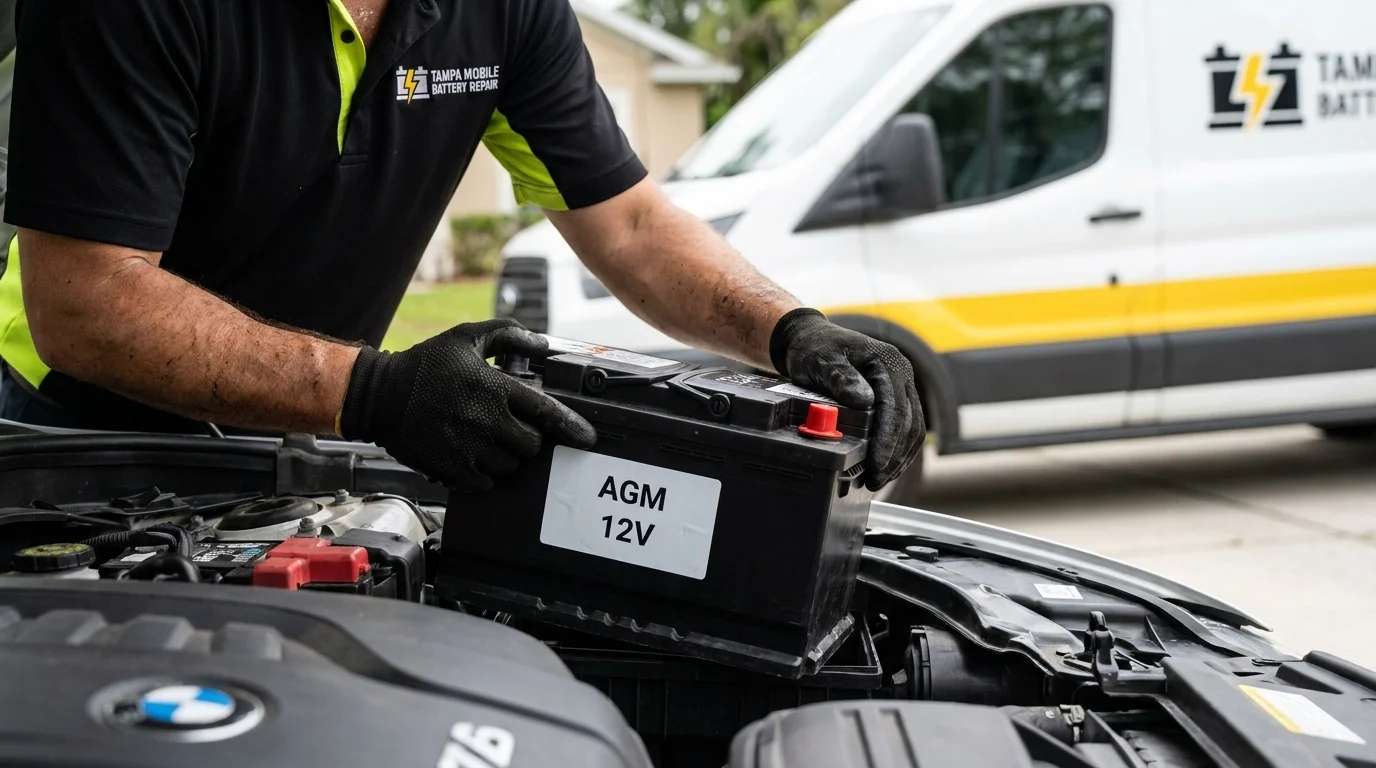
- AGM batteries: often a bit more heat-tolerant and longer-lived when they're the correct fit for the car, though they still wear out faster here than up north. Our AGM vs standard battery guide breaks down the differences.
How you drive matters too. A car that runs the full commute on I-275 every day keeps its battery topped off. A car that makes three-mile trips to the grocery store, or sits for weeks in a garage while its owner travels, spends its life partially charged. That second pattern is common with seasonal residents in places like Sun City Center, where a second car may sit for months over the summer and come back with a battery that's never quite the same.
How to Tell How Old Your Battery Is
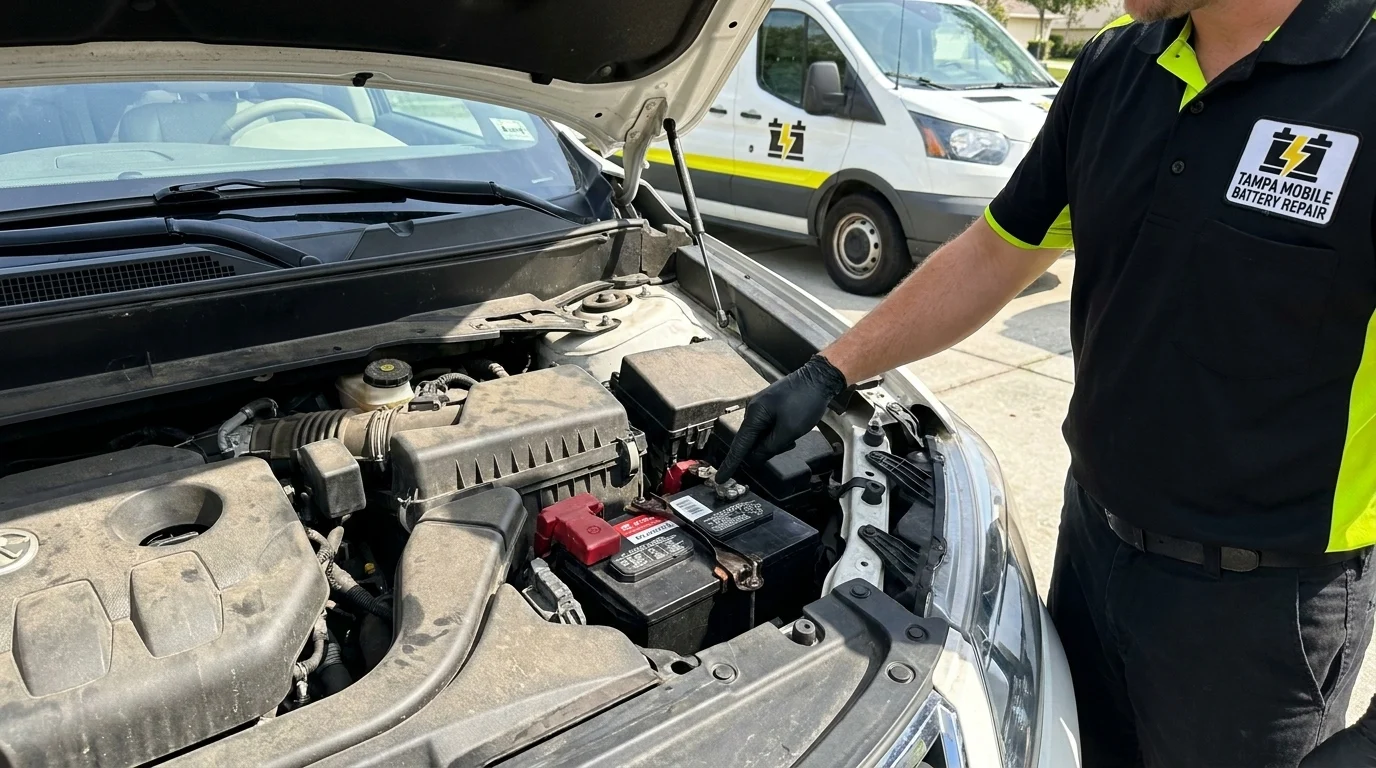
Pop the hood and look at the top or side of the battery case. Most batteries carry a date in one of two forms:
Sticker or punch-out date
Many retail batteries have a sticker showing the month and year it was sold or installed, such as 6/23. Some have a round sticker with the month punched out and the year printed beside it.
Manufacturer code
Others use a code stamped into the case. A common format uses a letter for the month (A for January, B for February, and so on, sometimes skipping I) and a number for the year, so C4 would mean March 2024. Formats vary by maker, so if the code doesn't make sense, check the receipt or your service records.
If you find a date and it's three or more years old, don't panic, but don't ignore it either. In our climate, that battery has done most of its useful work. If there's no date at all, assume it's older than you think.
Why Tampa Batteries Often Die After a Heat Wave
Here's a pattern we see every year. July and August do the damage quietly. The car keeps starting because warm batteries actually deliver current more easily. Then comes a cooler morning in late fall, a big afternoon thunderstorm that drops temperatures, or simply a weekend when the car sits, and suddenly the engine cranks slowly or just clicks.
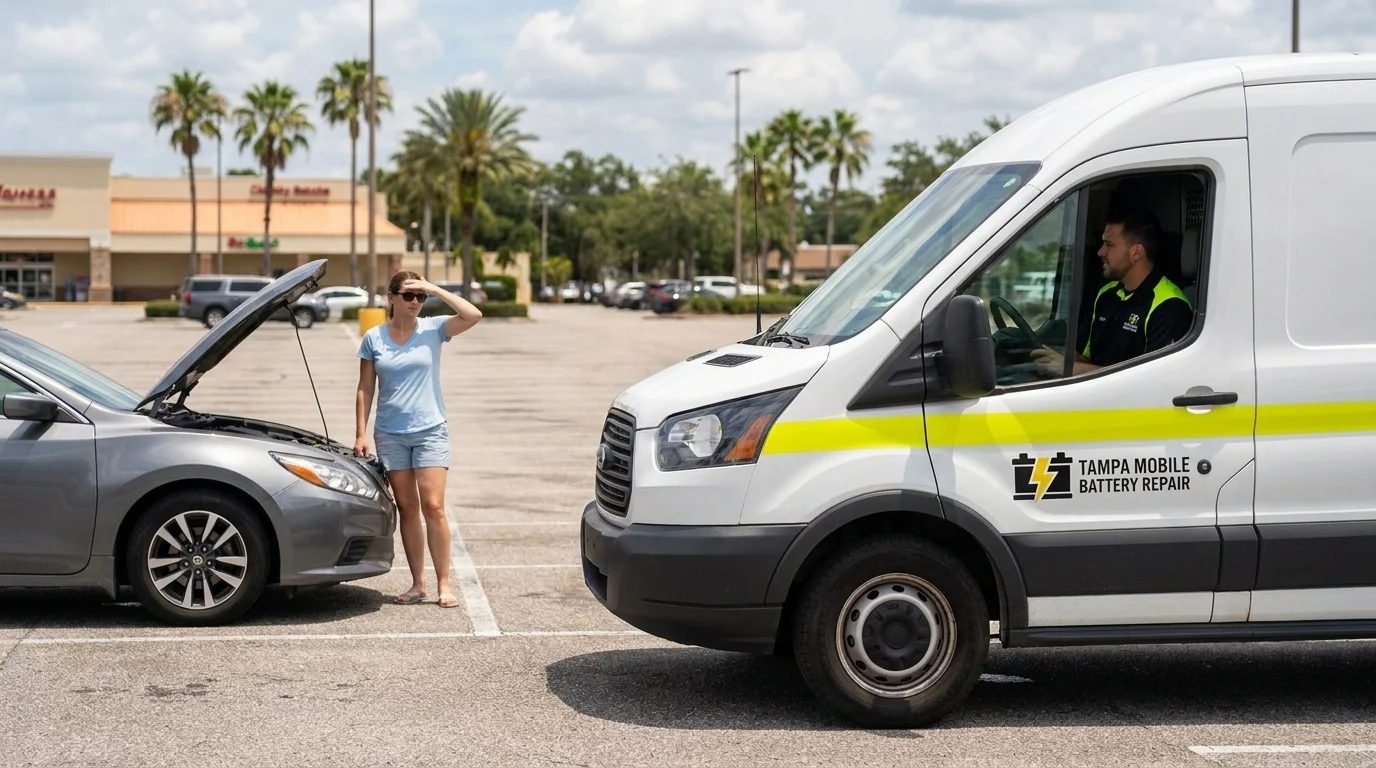
That timing fools people into blaming the weather that day. The real cause happened months earlier. It's also why summer is when calls spike at shopping centers, beach lots, and office garages: a battery that's on the edge can't handle the combination of a long hot soak and a heavy air-conditioning load on restart.
If you notice a slower crank, dim headlights at idle, or a battery light, read our rundown of the signs your car battery is dying. Those warning signs usually show up a few weeks before the battery quits for good.
Simple Ways to Get More Life From a Battery in Florida
You can't change the weather, but you can tilt the odds:
- Park in shade or a garage when you can. A covered parking deck downtown or a carport at home keeps under-hood temperatures noticeably lower.
- Drive long enough to recharge. A battery needs real driving time, not a five-minute trip, to recover from each start. Combining errands helps.
- Keep the terminals clean and tight. Humidity and salt air near the bay encourage corrosion, which adds resistance and makes the alternator work harder. Our battery terminal cleaning service handles crusty clamps on-site.
- Use a battery maintainer on stored cars. If a car will sit for more than a couple of weeks, a smart maintainer keeps it from slowly draining.
- Get it tested every year after year two. A test catches a weak battery before it strands you.
We cover more heat-specific habits in our post on how to keep a car battery from dying in summer.
Testing a Battery Before It Leaves You Stuck in Tampa
Age is a useful clue, but it isn't a diagnosis. Some three-year-old batteries test strong; some eighteen-month-old batteries are already failing because of a parasitic drain or a weak alternator. The only way to know is to test it.
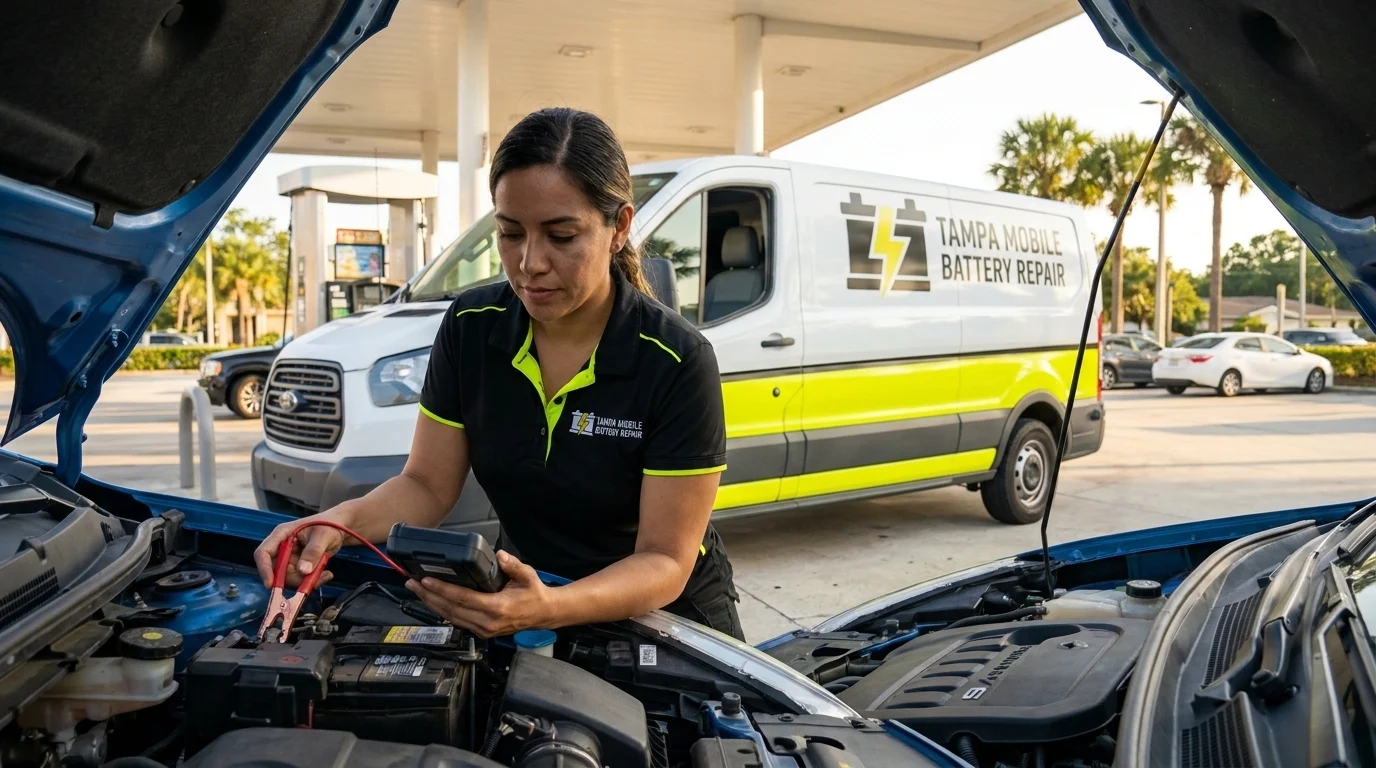
A proper on-site battery test checks resting voltage, estimates the battery's actual cranking ability against its rating, and looks at how the charging system behaves with the engine running. We do this wherever the car is parked, whether that's a driveway in Wesley Chapel, an office lot near Westshore, or a home in Valrico. If the battery is near the end, you can plan a mobile battery replacement at a convenient time instead of waiting for it to quit on I-275 at rush hour.
The bottom line: in Tampa Bay, budget for a new battery every two to four years, check the date code once in a while, and have it tested once it's past the two-year mark. That small habit saves a lot of hot, frustrating afternoons.