Short answer: yes. A bad alternator can drain a battery in two different ways, and both end the same way, with a car that will not start. The tricky part is that a failing alternator often looks exactly like a bad battery, so people replace a perfectly good battery and find themselves stranded again a week later.
Here is how alternator problems drain a battery, the signs to watch for, and how an alternator and charging-system test sorts out which part is really at fault.
How the Battery and Alternator Work Together
The battery's main job is to start the engine. Once the engine is running, the alternator takes over, powering the lights, fan, radio, and computers while recharging the battery for the next start.
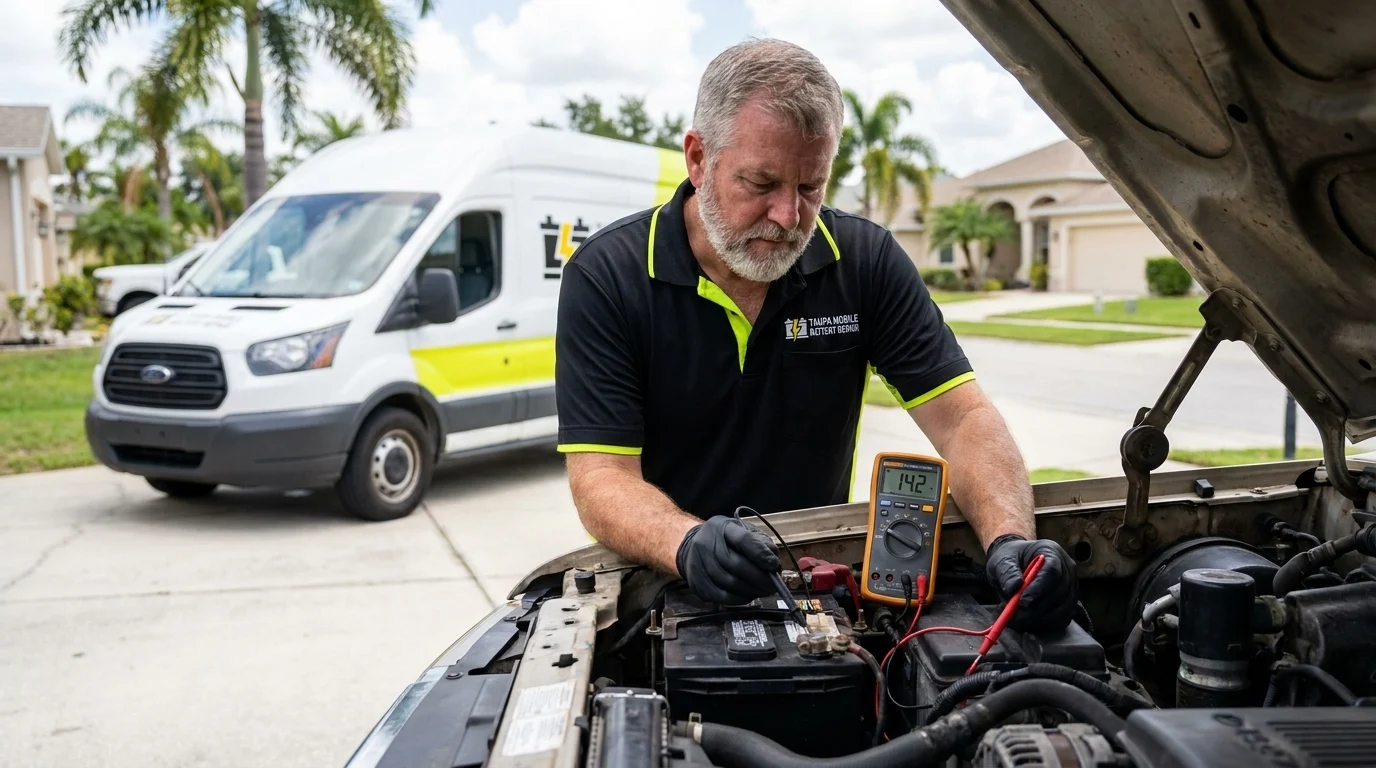
A healthy, fully charged battery at rest reads about 12.6 volts. With the engine running, a working charging system typically holds somewhere around 13.5 to 14.7 volts, depending on the vehicle and conditions. When that running voltage drops toward battery voltage, the alternator is not keeping up, and every mile you drive pulls the battery lower.
Two Ways a Failing Alternator Drains Your Battery
1. Undercharging while you drive
Worn brushes, a failing voltage regulator, a slipping belt, or a damaged connection can cut alternator output. The car keeps running, but now it is living off the battery. Eventually the battery cannot supply enough, and the engine stalls or the dash starts lighting up with warnings. This is a common story behind breakdowns on I-275 and I-4 after dark, when headlights and the AC fan are both pulling hard.
2. Draining while parked
Inside the alternator is a rectifier made of diodes that convert its output to direct current. When a diode fails, it can let current leak back through the alternator after the engine is shut off. The result is a slow overnight drain: the car starts fine in the afternoon and is dead the next morning. This is one form of parasitic drain, and it is easy to mistake for a battery that simply will not hold a charge.
Warning Signs That Point to the Alternator, Not the Battery
- A battery or charging warning light on the dash while driving
- Headlights or dash lights that dim at idle and brighten when you rev the engine
- A whining or grinding noise from the front of the engine
- A burning-rubber or hot-wire smell
- The car dies while running, rather than just failing to start
- A new battery goes dead within days or weeks
Compare those to the classic symptoms in our post on signs your car battery is dying. Slow cranking on a cold start with everything else normal leans toward the battery; trouble while driving leans toward the alternator.
How a Charging-System Test Finds the Problem in Tampa
Guessing is expensive. A proper diagnosis checks each part of the system in order:
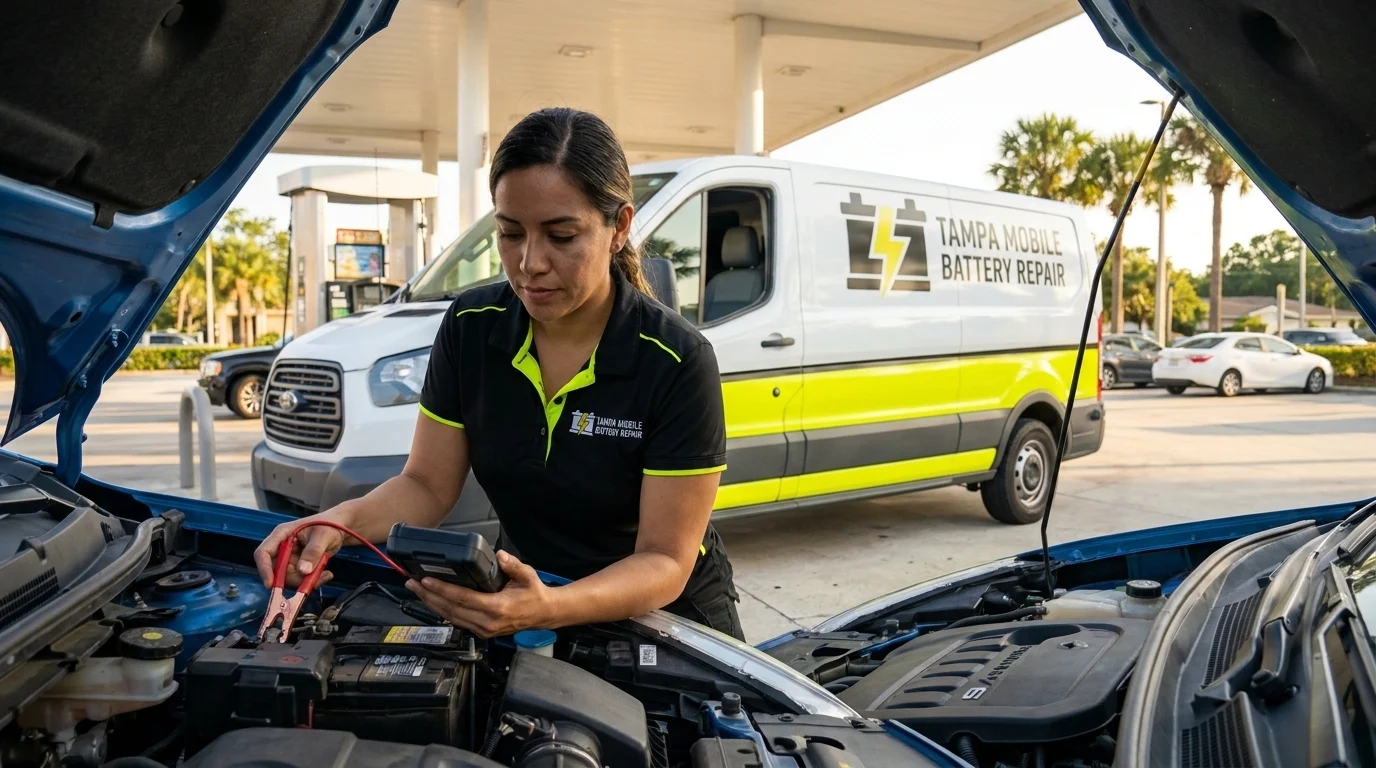
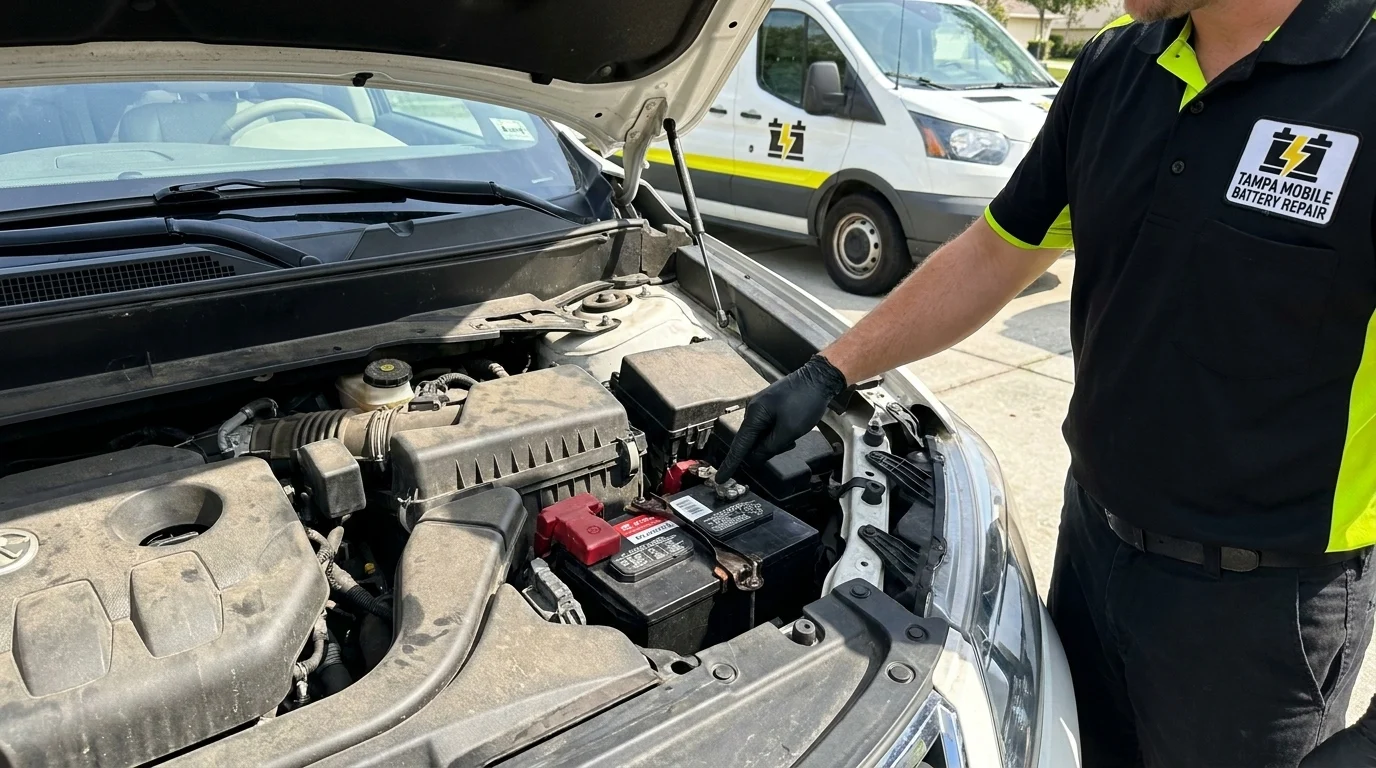
- Battery test. A conductance tester measures the battery's health and state of charge. Our standalone battery testing is the starting point.
- Running voltage. With the engine running, a multimeter on the terminals shows whether the alternator is charging in the normal range.
- Load test. Turning on headlights, blower, and defrost shows whether output holds up under real demand.
- Ripple check. Excess AC ripple can reveal a failing diode in the rectifier.
- Parasitic draw test. With the car off and modules asleep, we measure the current still flowing. A healthy car usually draws only a small amount, often well under about 50 milliamps once everything settles, though it varies by model.
A full charging-system diagnosis is $69, and a parasitic drain test runs $95 to $145 depending on how long it takes to isolate. We do not replace alternators ourselves; we tell you clearly what we found so your mechanic can fix the right part the first time.
When It Is Not the Alternator
Plenty of dead batteries have nothing to do with the alternator. Common culprits we find around Tampa Bay include:
- A glove box, trunk, or under-hood light that stays on
- Aftermarket stereos, amps, remote starters, or alarms wired incorrectly
- Dash cams running in parking mode
- A module that never goes to sleep after a software glitch
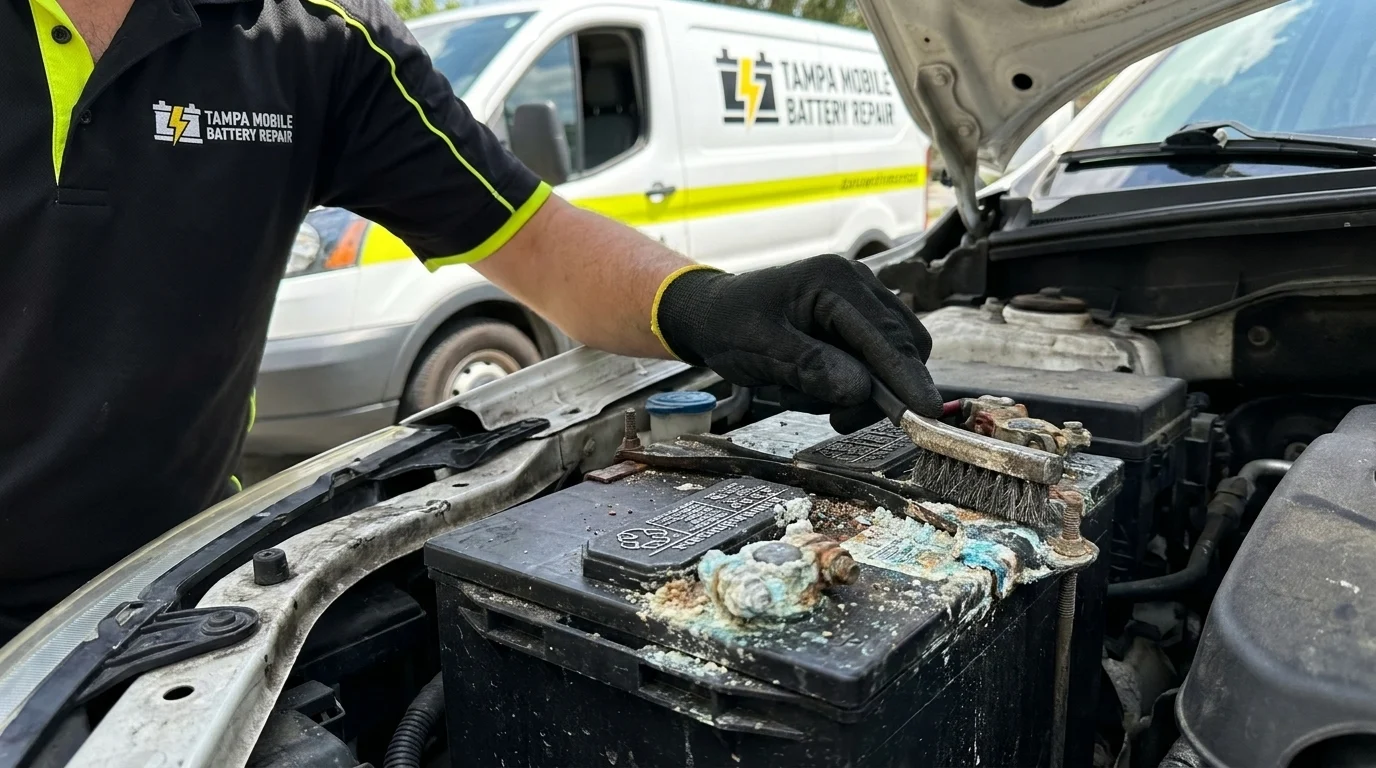
- Corroded or loose terminals that keep the battery from charging fully. A terminal cleaning often solves that one.
- A battery that is simply worn out after a few Florida summers. See how long batteries last in Florida.
Why Tampa Driving Is Tough on Charging Systems
Alternators work hard here. Long summer afternoons mean the AC compressor and cooling fans run almost constantly, and stop-and-go traffic on Dale Mabry, Fowler Avenue, or I-4 near downtown keeps engine speed low, which is exactly when alternator output is weakest. Heat under the hood also takes a toll on the internal parts, including the diodes and the voltage regulator.
Summer storms add another layer. Driving through standing water after a heavy afternoon downpour can splash the alternator and belt, and a wet, slipping belt may squeal and briefly cut charging output. If that squeal never goes away once things dry out, have the belt and tensioner checked.
None of this means your alternator is about to fail, but it does explain why a charging problem can show up suddenly in July after months of normal driving. If your car is older or has high mileage, adding a charging-system check to your next battery test is a smart, inexpensive habit. It takes only a few minutes when the tech is already there, and it can catch a weak regulator or a worn belt before it leaves you parked on the shoulder waiting for help.
What to Do If Your Battery Keeps Dying Around Tampa Bay
If you have been jumped more than once in a few weeks, stop replacing parts and get the system tested. Driving on a failing alternator risks a stall in traffic, and a new battery installed on a bad charging system will be damaged by repeated deep discharges.
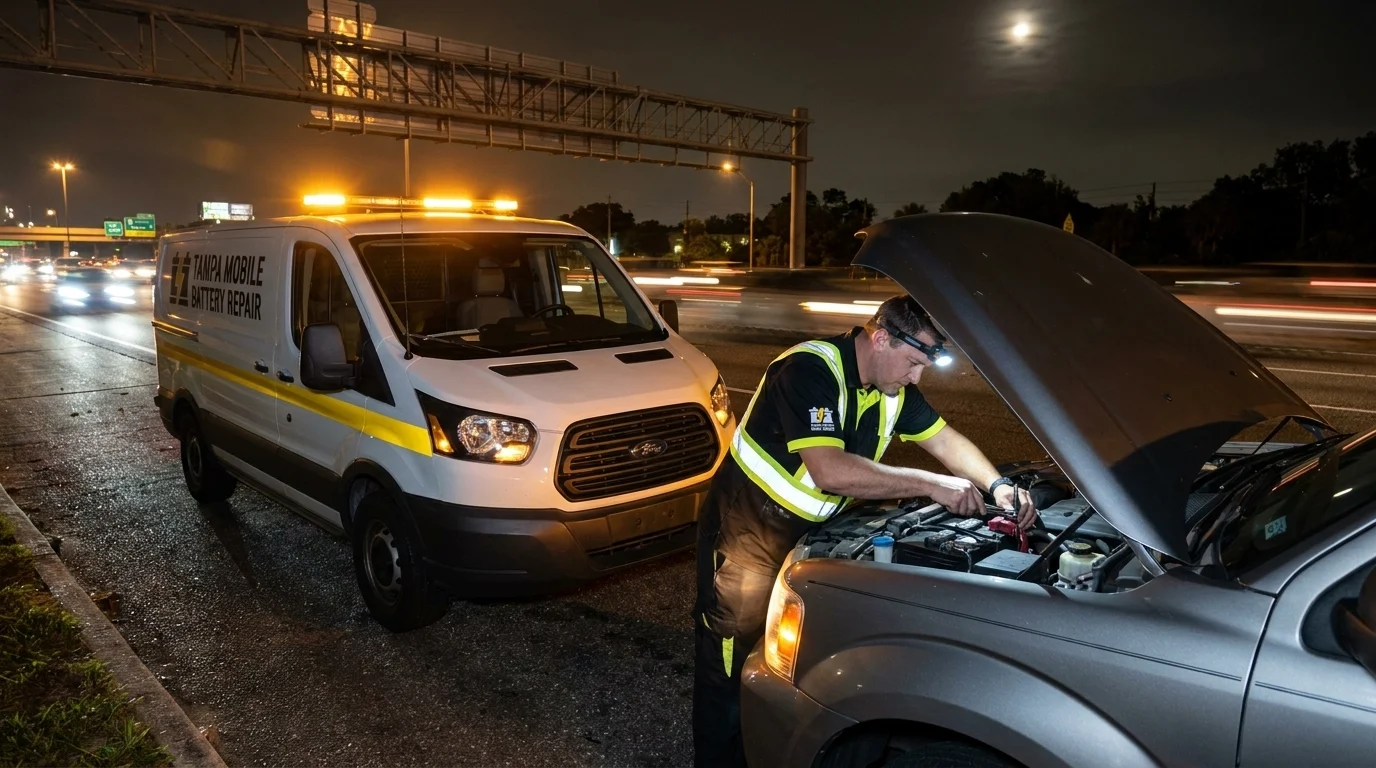
We come to you, whether that is a driveway in Temple Terrace, an office lot in New Tampa, or a shoulder on the interstate. Drivers further north in Lutz and east in Plant City are covered too. The tech tests the battery and charging system on site, so you leave knowing whether you need a battery, an alternator, or a fix for a hidden drain.
If the car is completely dead and you just need to get it to your mechanic, a jump plus a quick output check tells you whether it is safe to make the drive.