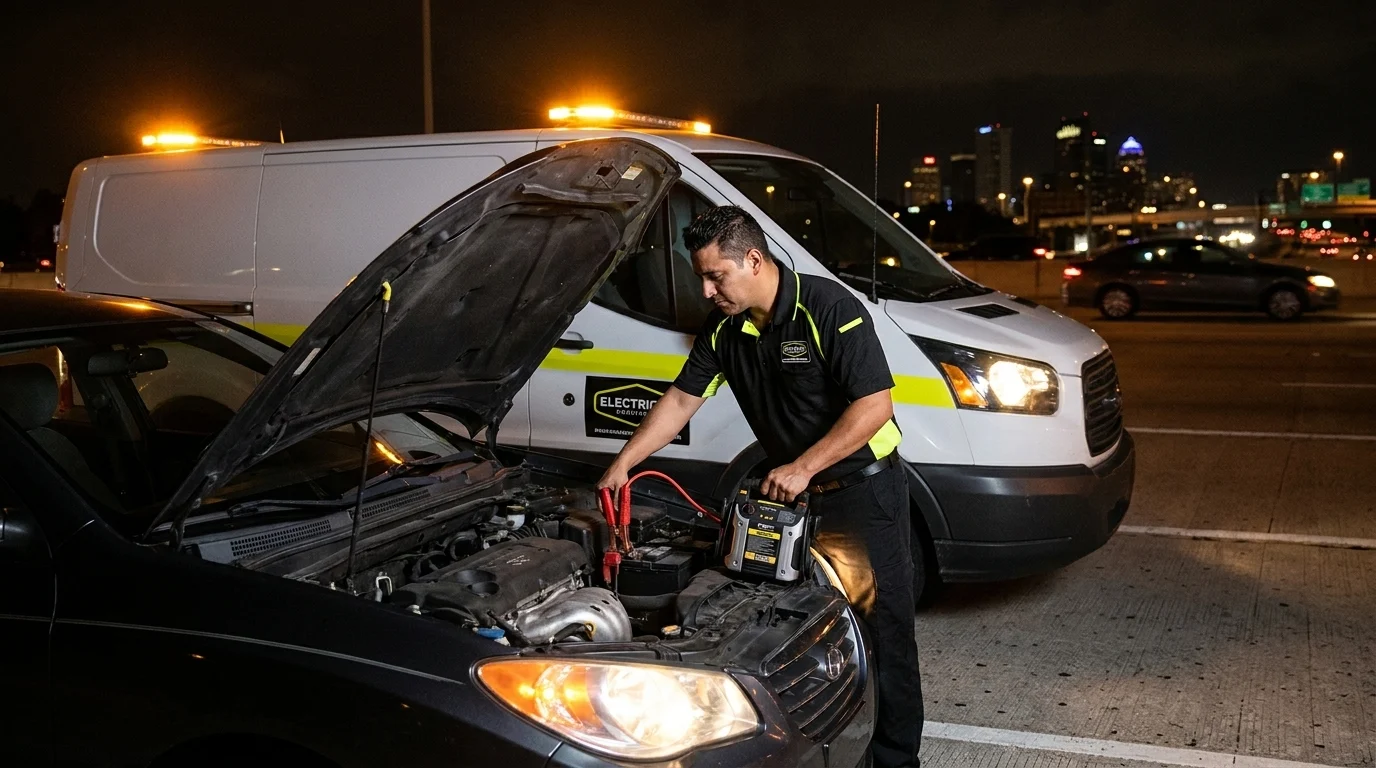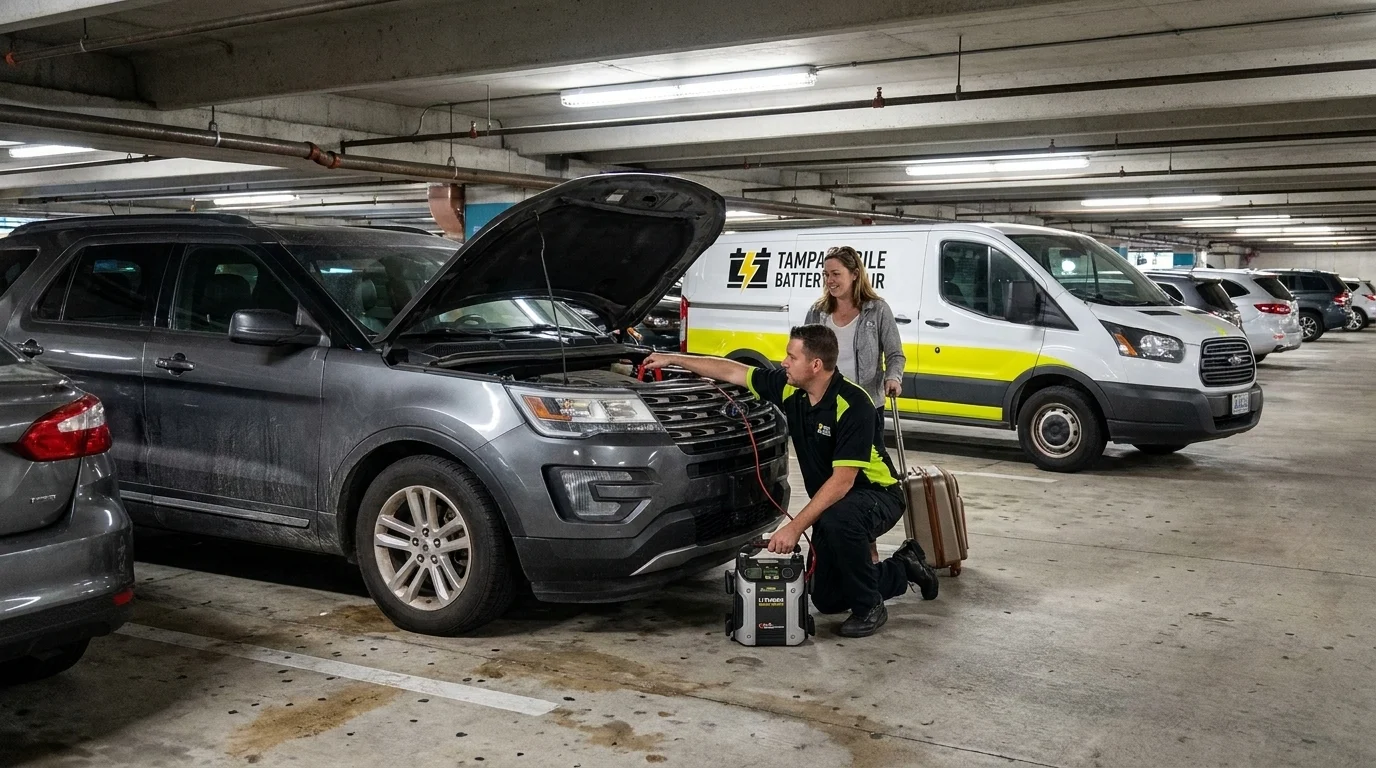
You land at Tampa International after a week away, ride the SkyConnect train to the garage, drag your suitcase to the car, turn the key, and get nothing but a click. It is one of the most common calls we take, and it makes sense: a battery that was already borderline sat for days in a hot concrete deck while the car's computers, alarm, and keyless entry slowly sipped power.
The good news is that a dead battery in airport or cruise parking is almost always fixable on the spot. Our roadside dead-battery service covers parking garages, surface lots, and park-and-fly lots around the airport, and the steps below will help you get rolling faster whether you are at TIA, a private lot near Westshore, or a cruise garage by Channelside.
Why Batteries Die While You Are Away From Tampa
Modern cars never fully turn off. Even parked and locked, the security system, keyless-entry receiver, telematics module, and memory for the radio and seats draw a small but constant current. On a healthy battery that drain is harmless for a couple of weeks. On a battery that is three summers old, it can be the last straw.
Tampa Bay adds two more problems:
- Heat. Upper decks of a parking garage and open long-term lots bake all day. Heat speeds up the chemical wear inside the battery and raises its self-discharge rate, so it loses charge faster while sitting.
- Short trips before the trip. If most of your driving is a few miles at a time, the battery may never get fully recharged, so it starts the parking stretch already below full.
That is why a car that started fine on the morning you flew out can be flat when you return. If your battery is past the typical Florida life span, our guide on how long a car battery lasts in Florida explains what to expect.
First Steps When Your Car Will Not Start in the Garage
Before you call anyone, take two minutes to confirm it really is the battery and to collect the details that will get help to you quickly.
- Check the signs. Rapid clicking, dim dash lights, or a dead key fob all point to a weak battery. A strong crank that will not catch is a different problem. Our breakdown of a car that clicks but will not start covers the difference.
- Write down exactly where you are. Note the garage or lot name, the level, the row or section marker, and the nearest elevator or stairwell. Airport garages are huge and many levels look identical, so this saves real time.
- Snap a photo of the nearest sign. It is easy to text to the tech and removes any confusion about which deck you are on.
- Check the clearance height. Garage entrances post a maximum clearance. Mention it when you call so we know which vehicle to send.
- Turn everything off. Lights, climate controls, and accessories off, key out, so all available power goes to the starter once a jump is connected.
Getting a Service Vehicle Into TIA Garages, Park-and-Fly Lots, and Cruise Parking
Rules for outside service vehicles differ from one facility to the next, and they can change, so we never assume. The simplest approach is to ask the people who run the lot.
Tampa International Airport garages
Whether you parked in the economy garage, a long-term garage, or short-term parking, check with the parking office or an attendant about service-vehicle access before or while you call us. They can tell you whether the tech needs to pull a ticket, where to enter, and whether there are any restrictions on the level you are on. Keep your own parking ticket or receipt handy, since you will still need it to exit.
Private park-and-fly lots
Off-airport lots usually have staff on site. Tell the front desk your battery is dead and that a mobile tech is on the way. Some lots offer a basic jump themselves, but if the battery is failing you will want it tested before a long drive home.
Port Tampa Bay cruise parking
If you are returning from a cruise, the garages near the terminals can be packed on debarkation mornings. Ask the parking staff where a service vehicle should enter, and give us the garage, level, and row. Expect a little extra time during peak traffic around Channelside.
Jump Start or New Battery Before the Drive Home?
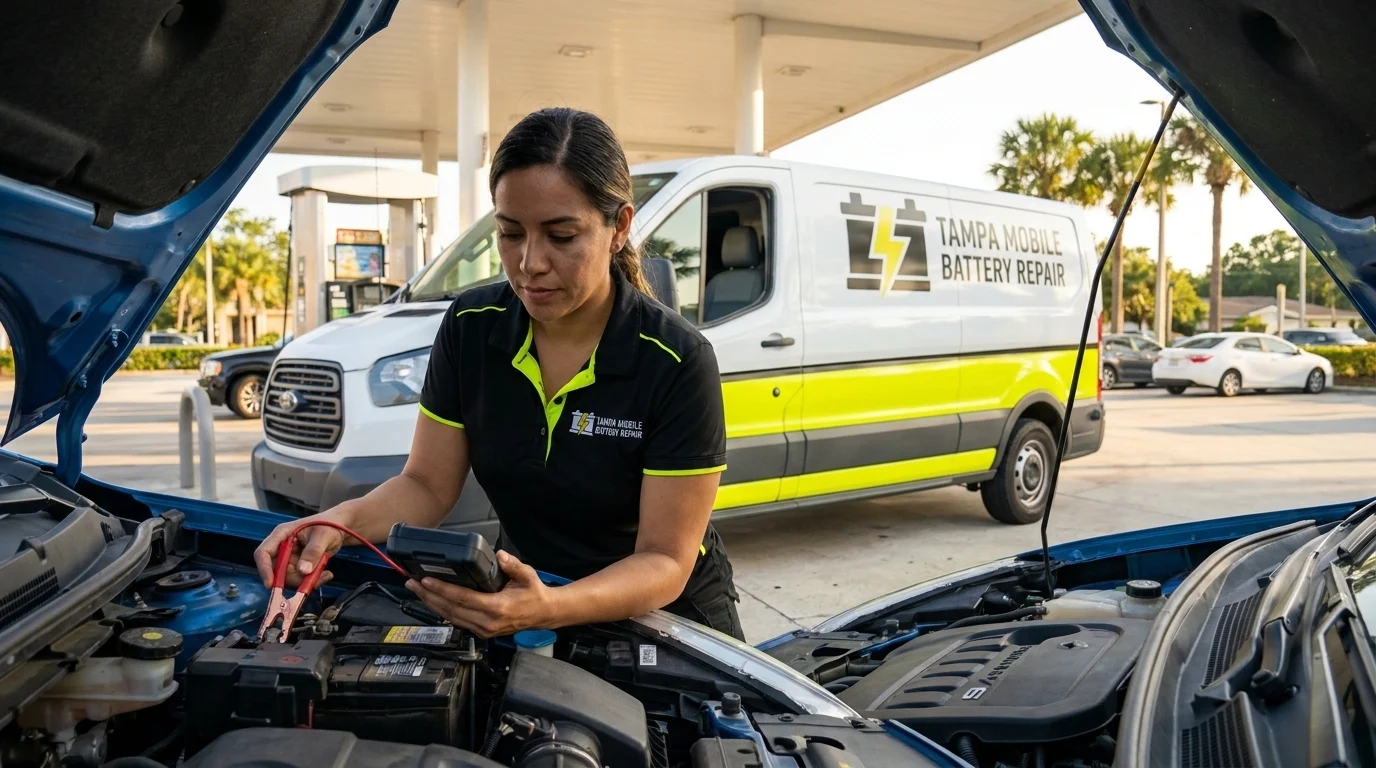
A jump start gets the engine running, but it does not tell you whether the battery can be trusted. That matters when home is in Westchase ten minutes away versus a drive up I-75 to Wesley Chapel or out I-4 to Plant City.
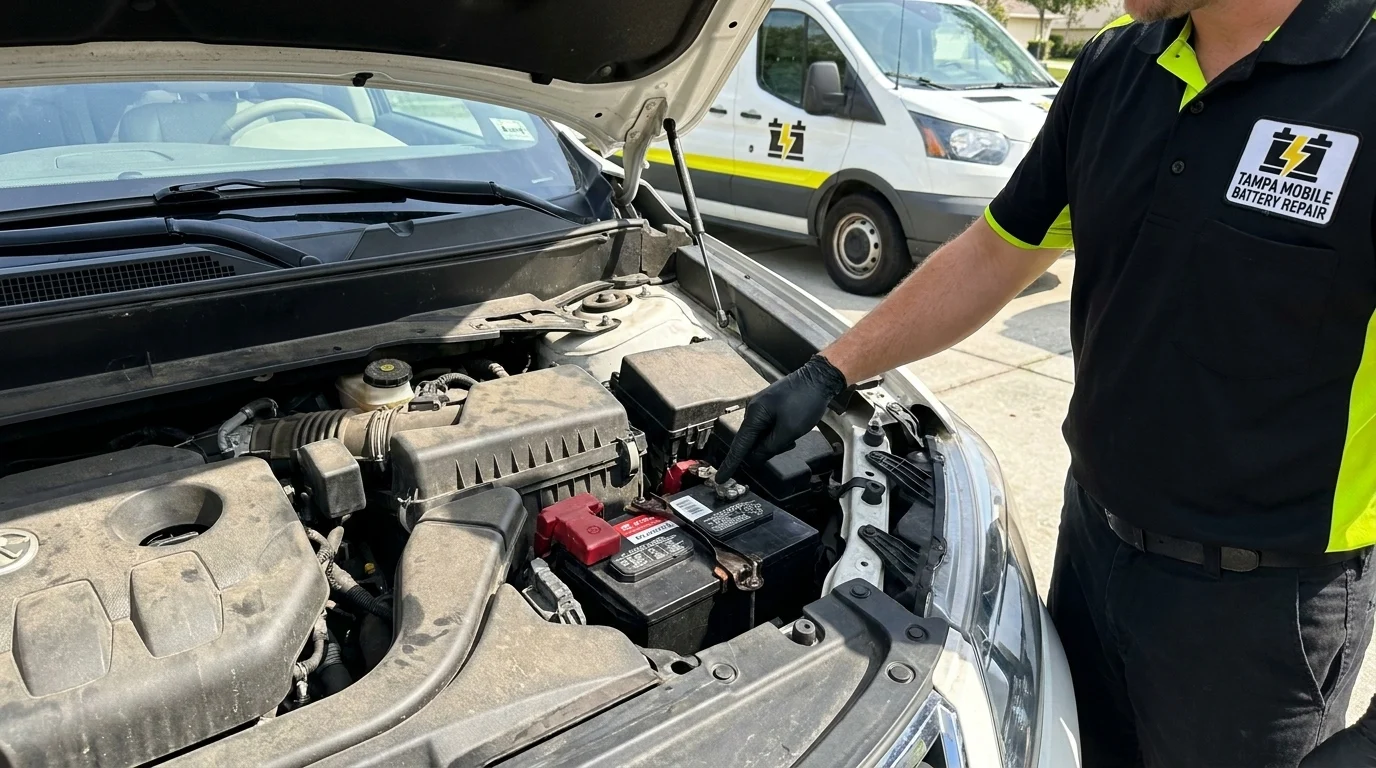
Every call includes a free battery and charging-system test, so once the car is running the tech can show you how the battery actually performs. In general:
- Battery tests good, just drained: a jump is usually enough. Drive at least 30 minutes, ideally with some highway time, to recharge it.
- Battery tests weak or bad: replacing it on the spot avoids a second dead start in your driveway the next morning. The jump fee is credited toward the battery if you replace it the same visit.
- Charging system reads low: the problem may be the alternator, not the battery. We diagnose it and tell you what we find, though we do not replace alternators ourselves.
For a deeper look at that decision, read jump start vs. battery replacement.
How Fast We Reach Airport and Cruise Parking Around Tampa Bay
Our dispatch is in central Tampa near downtown and I-275, which puts TIA, the Westshore park-and-fly lots, and the cruise garages by Channelside within a fairly short drive. Typical arrival for the city of Tampa runs roughly 20 to 45 minutes depending on traffic and time of day.
Travelers whose car died after the drive home, or at a gas stop on the way, are covered too. Calls from Brandon and Riverview typically see arrival in roughly 35 to 55 minutes, and the far edges of Pasco take longer. If the car started at the garage but quit at a pump off SR-60 or I-75, the same rule applies: note the station name and the nearest cross street so the tech can find you quickly.
We are open around the clock with no after-hours or holiday surcharge, which matters when the redeye lands at 1 a.m. You get a firm price on the phone before the van rolls.
How to Avoid a Dead Battery on Your Next Trip Out of TIA
- Get the battery tested before you leave if it is more than two or three years old. A quick test tells you whether it can handle a week of sitting.
- Unplug the extras. Dash cams with parking mode, phone chargers in always-on sockets, and plug-in GPS units add to the drain.
- Park on a lower or covered level when you can, out of direct afternoon sun.
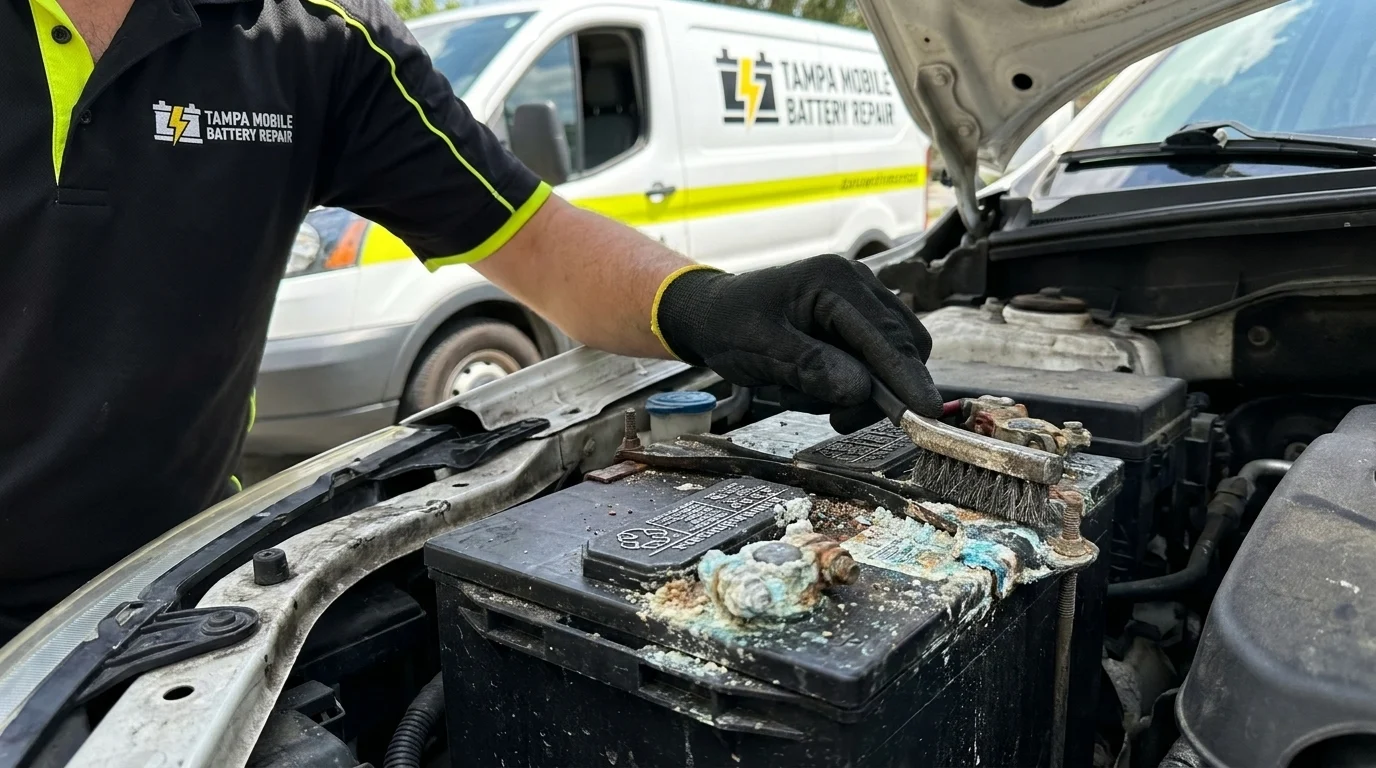
- Clean corroded terminals. Crusty buildup adds resistance that makes a weak battery even harder to start from. Our terminal cleaning service takes care of it.
- Take a longer drive the day before. Thirty minutes or more on I-275 or the Veterans Expressway tops the battery up better than errands around the block.
A few minutes of prep beats standing in a garage stairwell with your luggage at midnight.