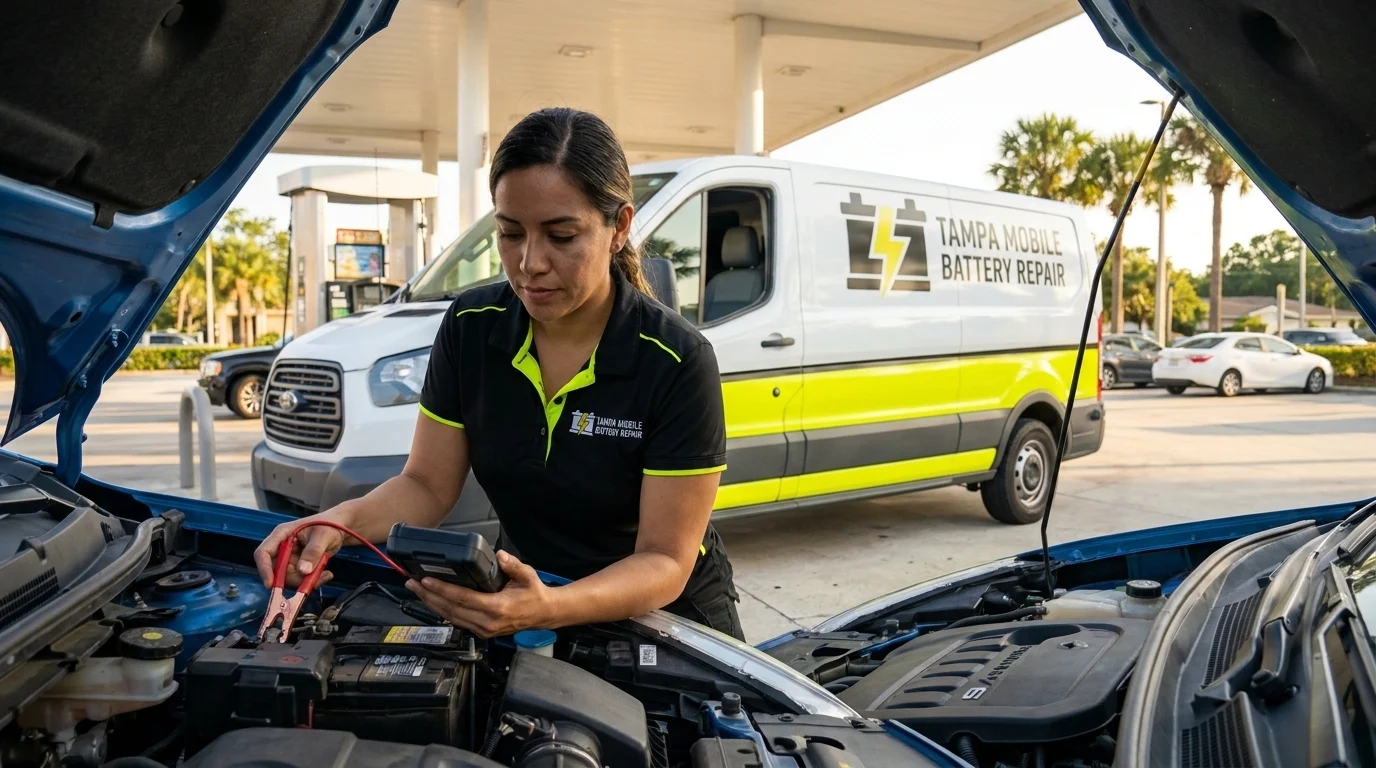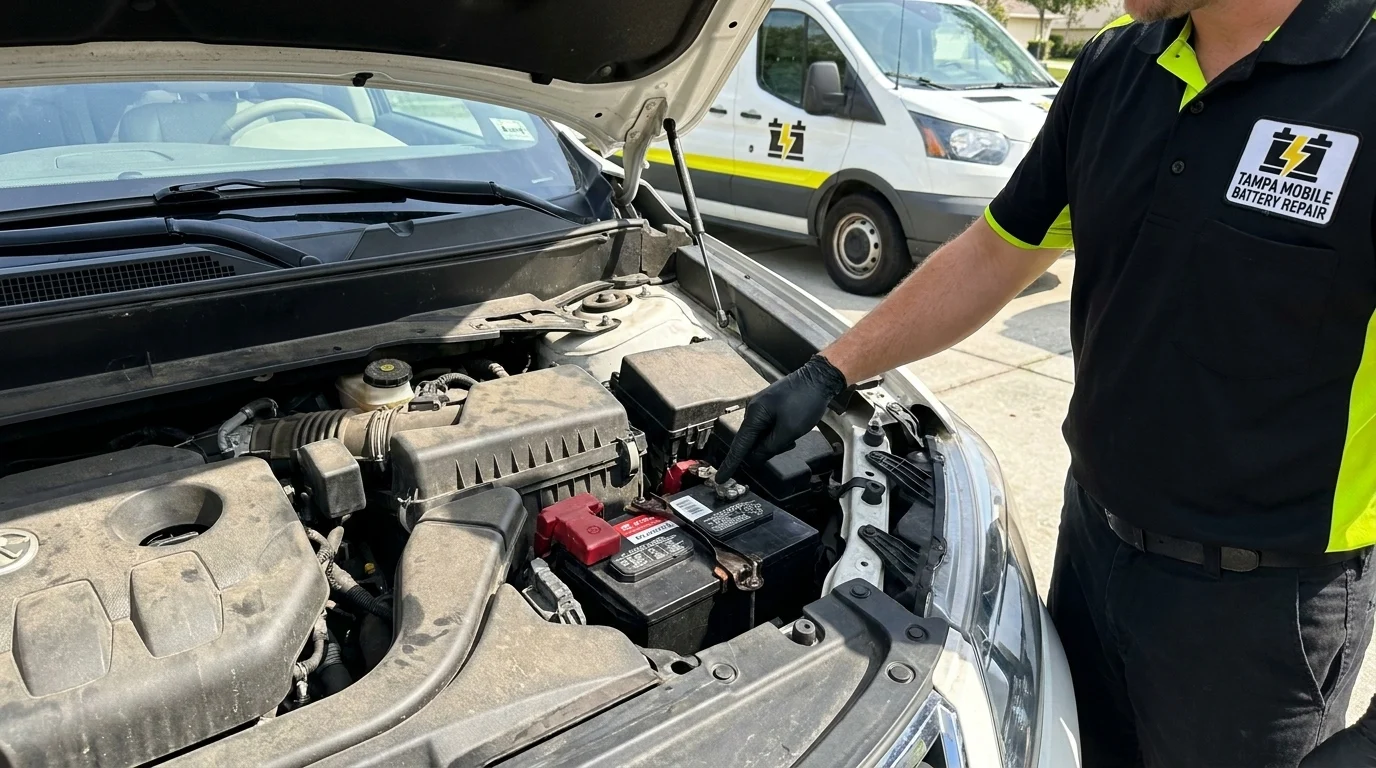
When a car won't start, the first instinct is to get a jump. Often that's exactly right. But a jump start only puts enough energy back into the battery to crank the engine once. Whether the car starts again tomorrow depends on why it died in the first place.
Get it wrong in one direction and you pay for a battery you didn't need. Get it wrong in the other and you're stuck again two days later, maybe somewhere less convenient than your driveway. Here's how to tell which situation you're in.
What a Jump Start Actually Does (and Doesn't Do)
A jump connects your car's electrical system to an outside power source, either another vehicle or a portable jump pack, long enough to spin the starter. Once the engine runs, the alternator takes over and begins recharging the battery.
Here's the catch: an alternator is designed to maintain a charged battery, not to restore a deeply drained one. A short drive after a jump replaces only a fraction of what was lost. And if the battery is worn out internally, it can't store a full charge no matter how long you drive. A jump treats the symptom. It doesn't tell you anything about the battery's health.
There's also a timing issue. Tampa summer driving usually means the air conditioning is running hard, the fans are on high, and you're sitting at long lights on Dale Mabry or Hillsborough Avenue. All of that pulls current from the alternator that would otherwise go back into the battery. So the drive home after a jump often recharges less than people expect, which is why a car that was jumped in the afternoon can be dead again the next morning even when nothing is actually broken.
When a Jump Start Is All You Need
A jump is usually the right fix when there's an obvious, one-time reason the battery drained and the battery itself is fairly young. Common examples:
- Headlights, a dome light, or a trunk light left on overnight
- A door that didn't fully latch, keeping interior lights and modules awake
- Running the radio or charging devices for a long time with the engine off at the beach or a tailgate
- A car that sat unused for several weeks while you traveled
- A battery under two or three years old that was starting strong until now
After a jump in these cases, plan on a solid drive of 30 minutes or more, ideally at highway speed. A loop on the Veterans Expressway or I-275 does more good than stop-and-go errands. If the car starts normally the next few mornings, you were probably fine. Our jump start service also includes a quick test so you're not guessing.
When Replacing the Battery Is the Smarter Move
Some situations point clearly toward a new battery:
- The battery is three years old or more. In Tampa Bay heat, that's late in a battery's life. See how long a car battery lasts in Florida for why.
- It's the second or third dead battery in a short span with no lights left on.
- It fails a load or conductance test even after charging.
- The case is swollen, leaking, or smells like sulfur.
- The car won't start even with a good jump, or barely cranks while connected.
- You noticed warning signs for weeks, like a slow crank or dim lights. Our list of signs your car battery is dying covers them.
In these cases, a jump might get you home, but it's only buying hours or days. Replacing the battery right then, where the car is sitting, usually costs less in time and stress than limping along.
Why Testing Settles the Question
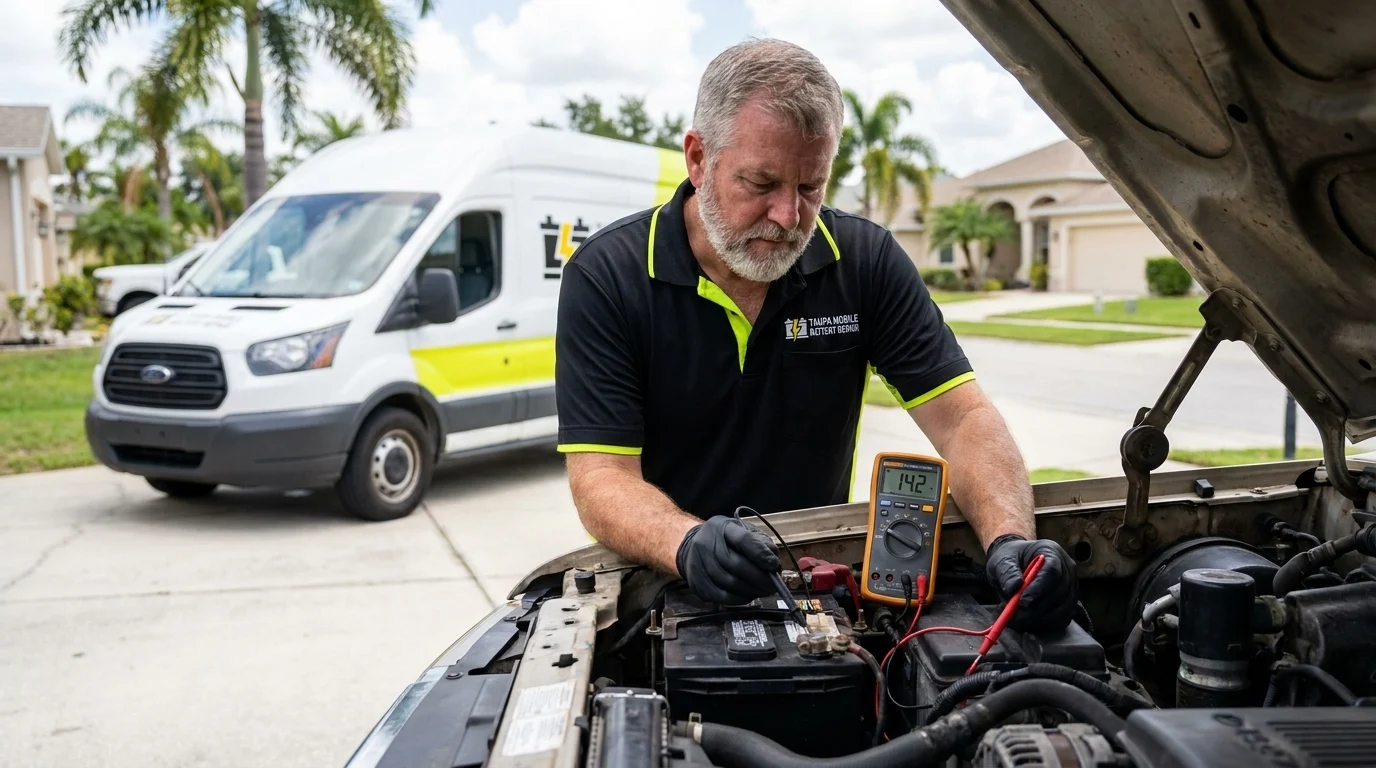
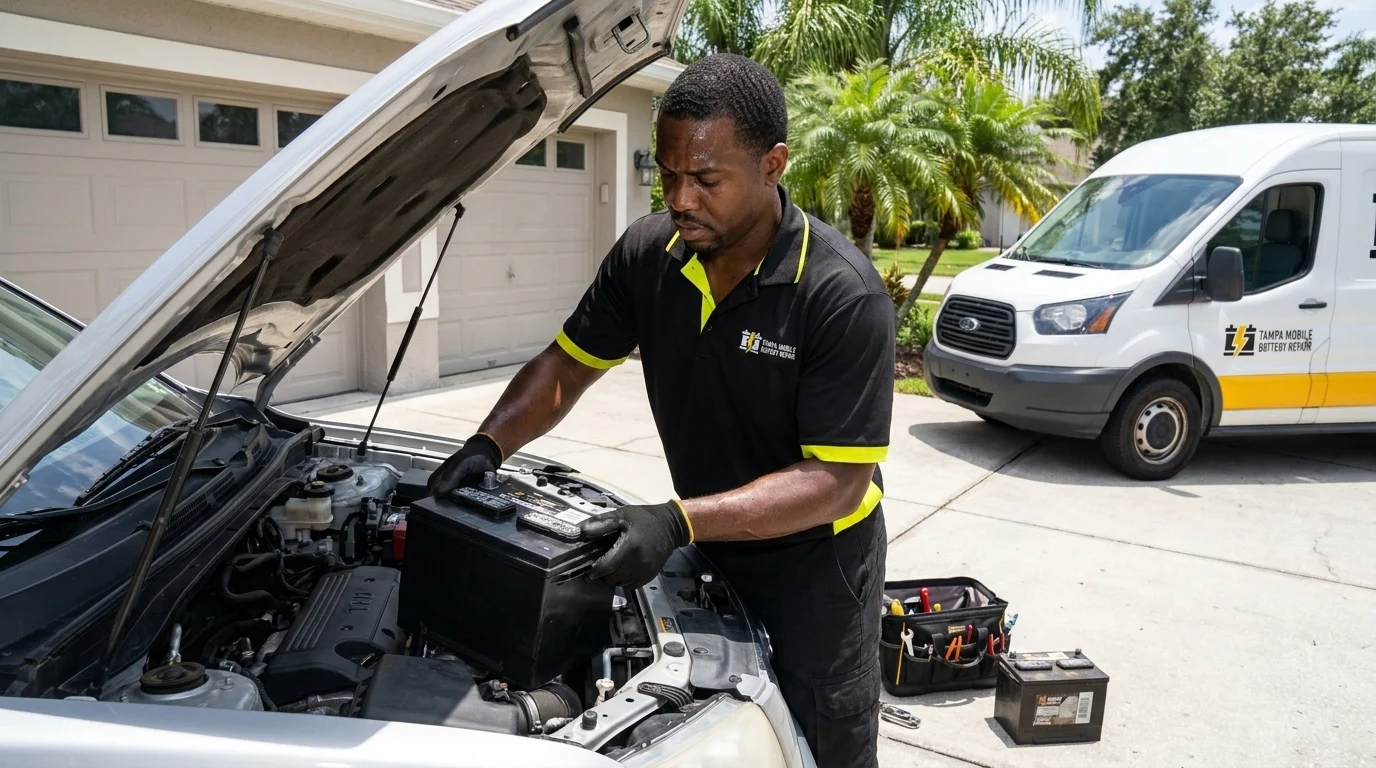
Guessing based on age is a decent start, but a test is what actually answers the question. A digital tester compares the battery's real cranking ability to what it's rated for. A charging-system check then confirms the alternator is putting out the right voltage. Between the two, you learn whether the battery is healthy and just drained, worn out, or fine while something else is the real culprit.
That last possibility matters. A failing alternator or a parasitic drain, like a module that won't go to sleep, will kill a brand-new battery just as fast as the old one. If the test points that way, an alternator and charging-system test is the next step before spending money on parts. We cover that scenario in can a bad alternator drain a battery.
Jump-Starting Safely on Busy Tampa Roads
If you're jumping a car yourself, a few precautions go a long way:
- Turn off both vehicles and all accessories before connecting cables.
- Connect red to the dead battery's positive post, then red to the good battery's positive post.
- Connect black to the good battery's negative post, then the last black clamp to bare metal on the dead car's engine or a designated ground point, away from the battery.
- Start the good car, let it run a few minutes, then try the dead car.
- Remove cables in reverse order.
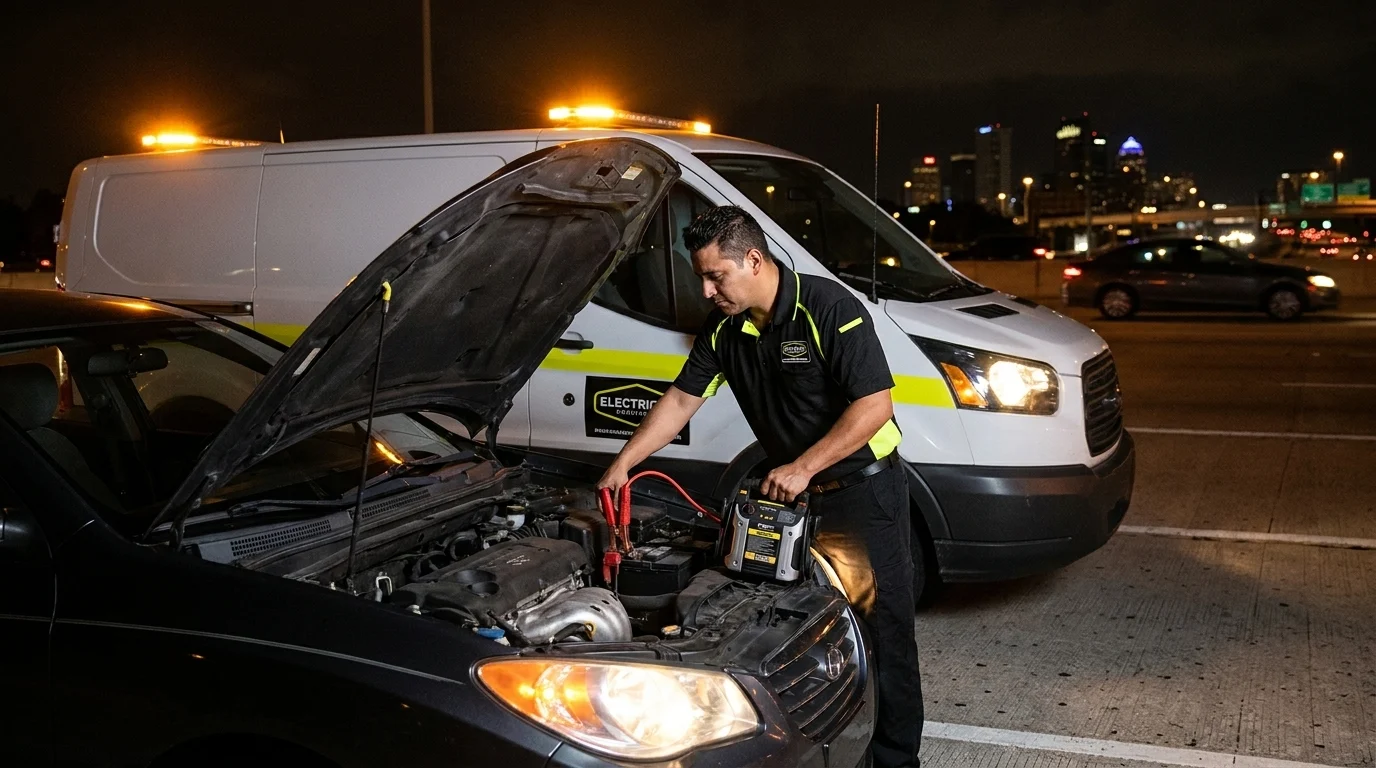
Many newer vehicles, including hybrids and some European models, have remote jump terminals under the hood instead of an easy-to-reach battery. Check the owner's manual before clamping onto anything. And on a highway shoulder at night, your safety matters more than the battery. If you're on a fast road like I-4 or the Selmon Expressway, stay buckled in with hazards on and let a roadside battery service come to you rather than standing between cars in traffic.
Cost Comparison for Tampa Bay Drivers
A mobile jump start in our area runs $65 to $95. A standard battery installed on-site runs $180 to $290, and AGM or start-stop batteries run $260 to $420. When we jump a car and the test shows the battery is finished, the jump fee is credited toward the new battery if you replace it on the same visit, so you aren't paying twice for one call.
That's the practical answer to jump vs replace: get the jump if you need to move now, get the test so you know the truth, and only buy a mobile battery replacement when the numbers say the battery can't hold up. Whether you're stuck at an apartment complex in Town 'n' Country, a driveway in Riverview, or a boat ramp lot in Ruskin, the decision works the same way.